
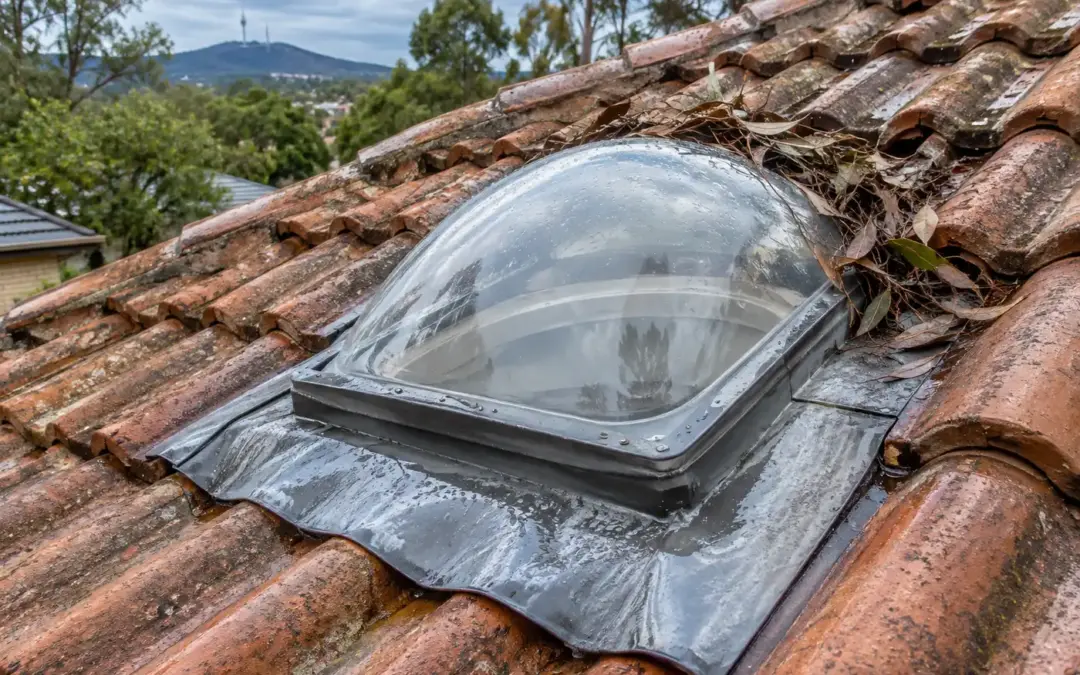
It usually shows up after the first heavy storm of the season. A brown ring appears on the ceiling beside the skylight, or a drip lands on the kitchen bench while you are cooking dinner. Most people assume the skylight has cracked. Sometimes it has. More often the water is getting in through the roof around it, and that changes what a leaking skylight repair actually involves.
We get called out to skylight leaks all over Canberra, and the fix is rarely a tube of silicone. Below is how to work out what is going on, what you can safely check yourself, and when it is time to get someone up on the roof.
Rule out condensation before you blame the roof
This one surprises people. A good share of “leaking” skylights in Canberra are not leaking at all. On a cold winter night, warm, moist air from a heated house rises into the skylight shaft and hits glazing that is close to the outside temperature. Water forms on the cold surface, collects, then drips. It looks exactly like a leak.
The giveaway is timing. Condensation turns up on cold, clear mornings with no rain at all. You will often see beads of water across the inside of the dome or the ceiling diffuser, and it tends to be worst in bathrooms and kitchens. A true leak follows the weather: it appears during or soon after rain, gets worse in wind-driven downpours, and usually leaves a stain on one side of the shaft rather than drips spread evenly across the glazing.
If it is condensation, the answer sits inside the house: better bathroom ventilation, an insulated shaft, or in some cases a double glazed unit. Nobody needs to touch your roof tiles for that.
Where the water usually gets in
When it really is rain, the cause is almost always one of the following. Often it is two at once.
Flashing that has lifted, cracked or was never dressed properly
Flashing is the metal or flexible skirt around the skylight that sheds water away from the opening and back onto the roof. On a tile roof it has to be shaped neatly over the tile profile. If it was rushed at install, has lifted over time, or has split along a fold, water runs straight underneath. In our experience this is the single most common cause, and it is the same problem we cover in our guide to fixing failed roof flashing around chimneys and walls.
Perished seals and gaskets
The rubber seals between the glazing and the frame do not last forever. Sun dries them out, and Canberra’s hot summers and frosty winters make every part of the unit expand and contract year after year. Eventually the seals shrink and crack, and water gets past the glazing itself.
Crazed or cracked domes
Older acrylic domes turn yellow and brittle with age, then develop fine cracks you can barely see from the ground. Hail finishes off plenty of them. If your dome looks cloudy or yellowed, assume it is near the end of its life.
Leaves and debris on the high side
The upslope side of a skylight is a natural dam. Gum leaves, twigs and dirt pile up against it, water backs up behind the build-up and finds its way over or under the flashing. We see this a lot in the leafier established suburbs, where the trees are older than the roofs.
Broken or shifted tiles nearby
A tile cracked by someone walking on the roof (antenna and solar installers are frequent culprits) lets water onto the sarking or battens, and it can travel a surprising distance before it drips. The skylight opening is often where it finally shows up, which is why the skylight gets the blame.
A roof leak that only looks like a skylight leak
Water follows timber and sarking downhill, so a fault well upslope can surface right at the skylight shaft. If the skylight checks out, the problem is elsewhere on the roof. Our guide on tracking down why a roof leaks walks through the usual suspects.
What you can safely check yourself
Start inside. If you have safe access to the roof space, take a torch up during or just after rain and look at the outside of the skylight shaft. Water stains or damp timber on the high side point to flashing or debris. Damp patches around the frame itself point to seals or glazing. From the ground, a pair of binoculars will tell you whether leaves are piled against the skylight and whether the dome looks cloudy.
Please stay off the roof itself. Tiles crack under foot, and wet tiles and old Colorbond are slippery. That is exactly how a small leak turns into a broken tile and a fall.
One more thing. Many of the leaking skylights we look at have already had silicone squeezed around the edges. It rarely holds for long, and silicone smeared over flashing can trap water and push it somewhere new. It also has to be scraped off before a proper repair can be done.
Reseal, reflash or replace: how the decision gets made
Once we have found the source, the repair usually falls into one of three levels.
Resealing. If the unit is sound and the glazing is in good shape, replacing perished seals or gaskets and clearing debris may be all it needs. This is the smallest job of the three.
Reflashing. When the flashing is the problem, we lift the surrounding tiles, remove the old flashing, fit new flashing shaped properly to the roof profile, then relay the tiles and replace any that are cracked. On a metal roof the process is similar, with attention to fixings and how the sheets lap around the opening. This is the fix that stops most leaks for good.
Replacing the unit. If the dome is crazed, the frame is rotting, or the skylight is old and the flashing is shot as well, patching one part of it is often money poorly spent. A new unit with new flashing solves both problems, and a double glazed model can deal with winter condensation at the same time. If you are weighing that up, our breakdown of what a new skylight costs explains what goes into the price.
We will tell you honestly which of the three your skylight needs. If you would like someone to take a look, our skylight leak repairs cover everything from resealing through to full reflashing on tile and metal roofs across Canberra.
Why waiting until spring is a bad idea
A slow drip feels manageable, but water in a ceiling does damage you cannot see. Plasterboard softens and sags. Ceiling insulation gets wet, compacts and stops doing its job. Timber framing around the shaft can rot, and mould gets going in the ceiling cavity long before it shows on the paint.
In the meantime, put a bucket or towels under the drip and move anything valuable out of the way. If water is anywhere near a downlight or light fitting, switch that circuit off at the switchboard and have an electrician check it before you turn it back on. And if the leak started straight after hail, photograph the ceiling and the skylight before anything is moved or repaired, because your insurer will want to see it.
Common questions about leaking skylights
Can leaking skylights be repaired, or do they need replacing?
Most can be repaired. If the glazing and frame are in good condition, new seals or new flashing will usually stop the leak. Replacement makes more sense when the dome is cracked, yellowed and brittle, or the frame has started to rot.
How much does it cost to fix a skylight leak?
It depends on what is causing it. Clearing debris and replacing seals is a much smaller job than lifting tiles to reflash the skylight, and both cost far less than a new unit. We quote once we have found the actual source, rather than guessing over the phone.
What is the best way to seal a leaky skylight?
Fix the cause rather than covering it. If the seals have perished, replace them. If the flashing has failed, the flashing needs to be redone. Silicone around the outside is a temporary patch at best and often makes the proper repair harder.
Why does my skylight only leak in heavy rain?
Light rain runs off normally, but heavy or wind-driven rain pushes water higher up the flashing and into small gaps that stay dry the rest of the time. Debris on the high side makes this worse by damming water against the skylight. Leaks that only show in big storms almost always point to flashing or a blockage, not the glazing.
What is the most common cause of skylight leaks?
Flashing problems, by a clear margin. Flashing that was poorly fitted at install, has lifted over time, or has been damaged by someone walking on the roof lets water straight past the opening. Perished seals and debris build-up come next.
Will insurance cover a leaking skylight?
That comes down to your policy and the cause. Sudden damage, such as hail cracking a dome, is often treated differently from gradual wear like perished seals or ageing flashing. Take photos, check your policy wording and talk to your insurer before work starts.
Who should I call to fix a leaking skylight?
A roofer is usually the right call, because most skylight leaks come from the flashing and tiles around the unit rather than the skylight itself. Someone who works on roofs every day can check the whole area, find leaks that are only showing up at the skylight, and relay tiles properly afterwards.
Get the leak found before the next storm
If your skylight is dripping, staining or fogging up, we can come out and tell you whether it is condensation, seals, flashing or something further up the roof, and we offer a free inspection to start with. Have a look at our skylight repair service and get in touch, and we will help you get it sorted properly the first time.