
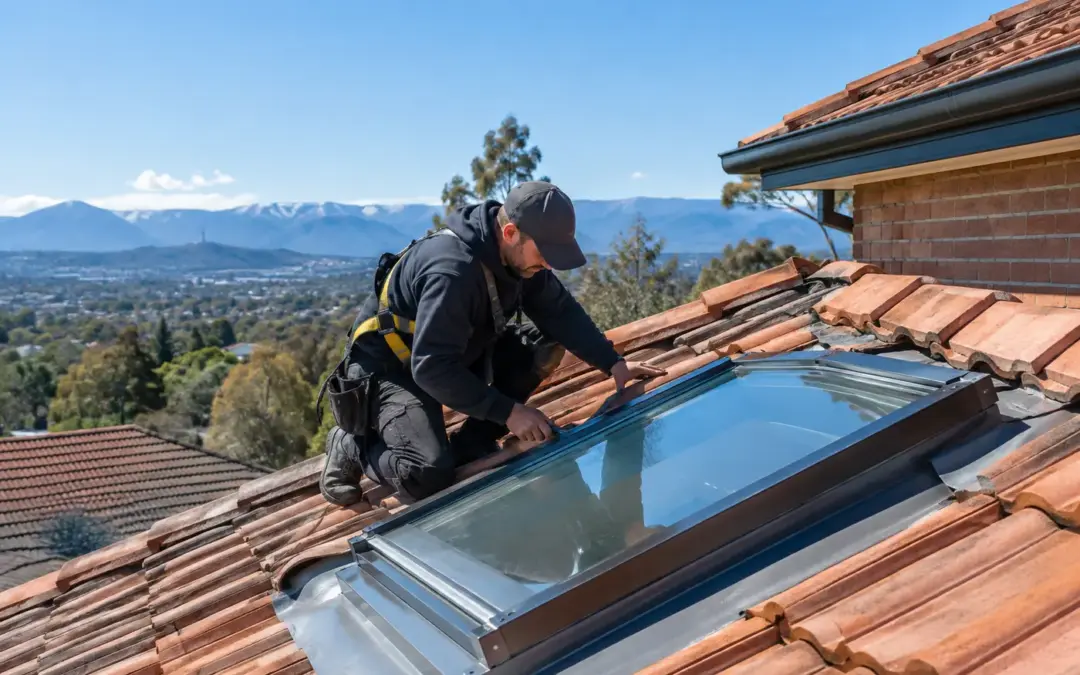
A common call goes like this. Someone has a dark hallway or an ensuite with no window, they have seen a neighbour’s skylight, and they want to know one thing before they go any further: what is this going to cost? Fair question. The honest answer to “what does skylight installation cost in Canberra” is that the skylight itself is often the smaller part of the bill. What you are really paying for is the work around it: cutting into the roof, keeping water out for the next twenty winters, and making the hole in your ceiling look like it was always meant to be there.
This guide walks through what actually moves the price, so you can read a quote and know whether it covers the things that matter.
The type of skylight sets the starting point
Most of the jobs we look at fall into one of three groups, and they are priced very differently.
Tubular skylights (sun tunnels)
A tubular skylight is a small dome on the roof connected to a reflective tube that carries light down to a round diffuser in the ceiling. It is the cheapest and quickest way to brighten a hallway, laundry, walk-in robe or bathroom. The roof opening is small, there is no big framed shaft to build, and the ceiling work is usually just a neat round cut. The trade-off is that you get light, not a view of the sky.
Fixed glass skylights
This is what most people picture: a rectangular glazed unit that sits in the roof plane, with a framed and lined shaft (the lightwell) running down to a square opening in the ceiling. They let in far more light and give you a view of sky and clouds. They also involve more carpentry, more plastering and a bigger flashing job, so the price climbs.
Opening and motorised roof windows
Units that open, manually or with a motor and rain sensor, are the top of the range. The product costs more, and a motorised unit needs power run to it, which means an electrician on top of the roofer. They make a lot of sense in kitchens and bathrooms where you want to let heat and steam out.
Branded units from the big names sit across all three groups. Brand matters less than people expect. Getting the right glazing and a flashing kit made for your roof profile matters more.
Your roof decides how much work the install takes
Canberra has a lot of both concrete and terracotta tile roofs and Colorbond or corrugated metal roofs, and the install is quite different on each.
On a tile roof, we lift and set aside tiles around the opening, frame the gap between the battens, fit the skylight, then dress a flexible flashing skirt over the tiles below and cut tiles back in around the sides. Older tiles can be brittle. On some post-war homes we break a few just walking to the spot, so it is worth checking the quote allows for replacements.
On a metal roof, the sheets are cut, and the water running down each rib has to be diverted around the unit. That needs a flashing kit matched to the sheet profile, and the sealing and fixing has to be done carefully because metal expands and contracts a lot between a frosty July morning and a January afternoon. Done badly, this is where leaks start a year or two later.
Roof pitch counts too. A low pitch roof sheds water slowly, so the flashing detail has to be spot on. A very steep roof, or a two storey home, can mean extra safety gear or edge protection, and that shows up on the quote as access costs.
The shaft between roof and ceiling is where prices spread out
This one surprises people. Two identical skylights on two houses in the same street can be priced quite differently because of what is happening in the roof space.
A short, straight lightwell under a low pitched roof is simple. A long shaft, one that has to angle past a beam or a ducted heating run, or one that needs framing around trusses, takes more timber, more plasterboard and more hours. With a tubular skylight, a long run may need extension tubes, and every bend loses some light.
Then there is the inside finish. Someone has to cut the ceiling, frame the opening, line the shaft, set the plaster and paint it. Some quotes include all of that. Some stop at the ceiling line and leave you to find a plasterer. Neither is wrong, but you need to know which one you are comparing.
Canberra weather changes what glazing is worth paying for
A skylight is a hole in your insulation. In our climate that works both ways: cold winter nights pull heat out through the glass, and summer sun can turn a room under a clear skylight into an oven. Upgrading the glazing costs more at the start and is one of the few extras we would call worth it for most homes.
Things to ask about on any quote:
- Double glazing rather than single
- Low-E or tinted glass, which cuts heat gain and glare
- A blind or shade for bedrooms and living areas that face north or west
- Insulation fitted around the shaft in the roof space, not just left open
Skylights also need to meet the building code, including energy efficiency rules, and requirements vary with the job. If you are adding several units or doing a larger renovation, check with your installer or a building certifier before work starts.
Flashing is the part of the price you should never trim
When we are called to a leaking skylight, the glass is rarely the problem. It is almost always the flashing: the formed metal or flexible skirt that sends water around the unit and back onto the roof. Silicone slapped around the edges instead of a proper flashing kit might look fine on install day. It will not look fine after a few Canberra summers of UV and a hailstorm or two.
So if one quote is well below the others, ask what flashing is being used and how it is fixed. We cover the warning signs of failing flashing in our guide to roof flashing repairs around Canberra homes, and the same rules apply around a skylight as around a chimney or wall junction.
Replacing an old skylight is its own job
A lot of Canberra homes built from the 1970s onward already have a skylight, often an old acrylic dome that has gone yellow and brittle. Replacing one is sometimes cheaper than a new install because the opening and shaft already exist. Sometimes it is not. A new unit may be a different size, the old flashing may have let water into the timber for years, and the shaft may need relining.
If there are water stains on the ceiling around your current skylight, get the roof checked before you order anything. Our post on tracking down why a roof leaks explains why the stain is often a metre or more away from the real entry point.
One more thing for older homes: if your house was built before the 1990s, ask about asbestos before anyone cuts into eaves or ceiling linings. It is a quick question, and it is better asked early.
What a fair quote should spell out
When you are comparing prices, line them up item by item. A clear quote should tell you:
- The make, model, size and glazing of the skylight
- The flashing kit and whether it suits your roof profile
- Whether the shaft framing, plastering and painting are included
- Any electrical work for motorised units
- Allowance for broken tiles or replacement sheets
- Access or safety equipment costs
- Removal and disposal of an old unit, if there is one
- What warranty applies, and to which parts of the job
If a quote does not mention one of these, ask. The cheapest number on paper often turns out to be the one with the most missing.
Our team handles skylight installation on tile and metal roofs across Canberra, and we are happy to explain how our 15 year warranty applies to your particular job.
Getting a firm price for your home
Because the roof, the shaft and the ceiling finish vary so much from house to house, a firm price really needs someone to look at the roof and the roof space. We offer a free inspection, look at where the skylight would go, and give you a written quote that lists what is included. If you have a dark room in mind, book a skylight quote with us and we will tell you honestly which type suits the space.
Common questions about skylight costs
How much does a skylight cost to install in Australia?
It depends mostly on the type. A tubular skylight is the cheapest option, a fixed glass skylight with a framed shaft costs more, and opening or motorised roof windows cost the most. Roof type, shaft length and whether plastering is included can shift the total a lot, so get an itemised quote after an inspection.
Is a sun tunnel cheaper than a skylight?
Usually, yes. A sun tunnel needs a much smaller roof opening and no framed lightwell, so there is less carpentry and plastering. It suits hallways, bathrooms and laundries well, but it gives you diffused light rather than a view of the sky.
Can you put a skylight in a tile roof?
Yes. Tiles are lifted around the opening, the unit is fitted between the battens, and a flashing skirt is dressed over the tiles below. Older tiles can crack during the job, so a good quote allows for a few replacements.
Do skylights add value to a home in Australia?
A well installed skylight can make a dark room far more usable, which buyers notice at inspections. A leaking one does the opposite. The value comes from good glazing and a watertight install, not from the skylight alone.
What are the downsides of skylights?
The main ones are heat gain in summer, heat loss in winter and the risk of leaks if the flashing is poor. Double glazing, low-E glass, a blind for north or west facing rooms and a proper flashing kit deal with most of these. Choosing the right location on the roof matters too.
Is a Velux skylight worth the extra cost?
Branded units generally come with matched flashing kits and good glazing options, which is what really stops leaks and heat problems. Whichever brand you choose, make sure the flashing suits your roof profile and the glazing suits the room. Those two choices matter more than the badge.