
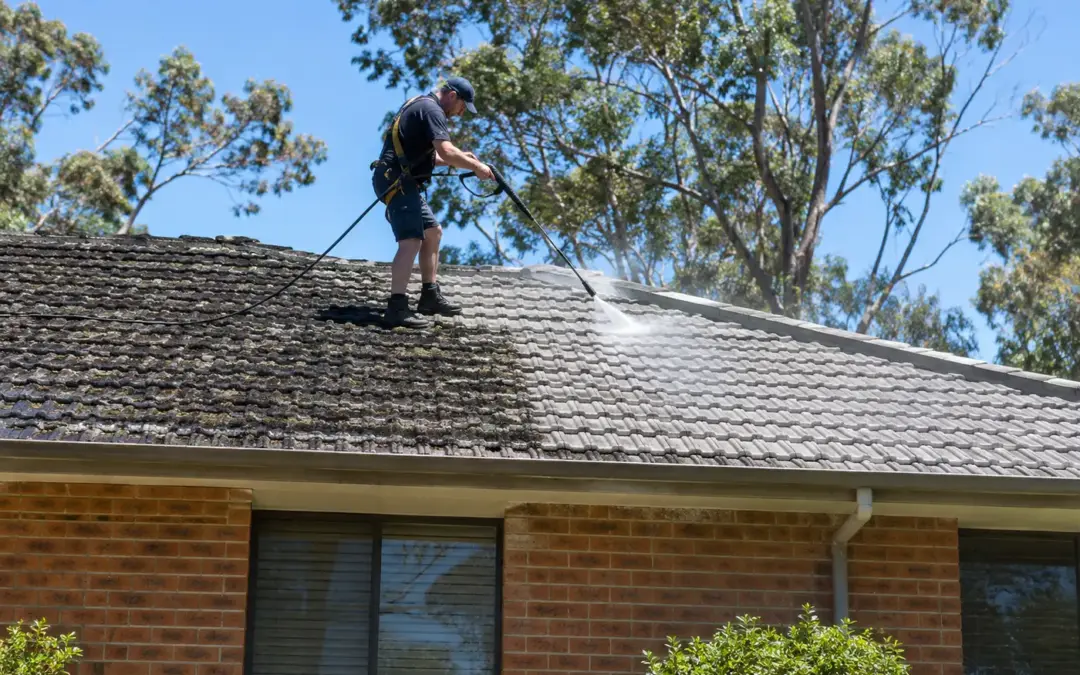
Most people book a roof restoration after seeing the finished result on a neighbour’s house: clean, glossy tiles that look close to new. What they rarely see is the work underneath that finish, and that is where a good job and a cheap one part ways. This guide walks through the tile roof restoration process the way we run it on Canberra homes, one stage at a time, so you know what should happen on your roof and what to ask about if a quote skips a step.
It applies to both concrete and terracotta tiles. Metal roofs follow a different sequence, built around rust treatment rather than ridge work, so we cover those separately.
It starts with someone actually walking your roof
A proper quote can’t be written from the driveway. We get up on the roof and look at the things that decide what the job needs: cracked or slipped tiles, the condition of the ridge capping, the valleys where two roof slopes meet, the flashings around chimneys and walls, and the gutters. Where we can, we also look inside the roof space for water stains on the timbers or torn sarking (the foil or membrane layer under the tiles).
This step also answers a question people don’t always expect: is restoration the right call at all? Most tile roofs are good candidates. A few have tiles so worn, or timber so damaged, that a coating would only hide the problem for a while. We would rather tell you that up front than sell you a paint job that won’t last.
Ask for photos from the inspection. Homeowners can’t easily see their own ridge lines, and a photo of a crumbling ridge cap explains a quote far better than a line item does.
Cleaning comes first, and it takes more care than it looks
Every restoration begins with a high pressure clean. The goal is to strip off moss, lichen, dirt and any loose old coating so the new coating bonds to sound tile rather than grime. In Canberra we see plenty of lichen on south facing slopes and on roofs shaded by big eucalypts, and it grips hard.
The skill here is restraint. Too much pressure on old terracotta, or on concrete tiles that have lost their surface, can etch the tile and drive water up under the laps. A careful operator works down the slope, adjusts the pressure to the tile, and keeps the water moving with the roof rather than against it. Once the roof is clean, the gutters and downpipes get cleared, because everything that came off the tiles has just landed in them.
Then the roof has to dry completely. Coating a damp roof is one of the most common reasons a restoration peels early.
Broken tiles are swapped before anything gets sealed
With the roof clean, cracks that were hidden under lichen become obvious. Hail, frost and foot traffic from antenna or solar installers all leave their mark. Each damaged tile is replaced before coating, never painted over.
Matching can be the tricky part. Many older tile profiles are no longer made, so we sometimes take sound tiles from a spot nobody looks at, such as the back of a garage roof, use them on the visible slopes, and fit the closest available match in their place. Once the whole roof is coated in one colour, the difference disappears.
Ridge capping is where most tile roof leaks begin
The ridge caps are the curved tiles along the peaks and hips of your roof. They sit on a bed of mortar (the bedding) and are sealed along their edges with a finishing layer (the pointing). On many of the roofs we inspect, the old cement pointing has cracked after years of hot summers and cold, frosty nights, and water finds its way in through those cracks.
Where the bedding is still solid, we repoint with a flexible pointing compound that bonds to the tile and moves with the roof as it heats and cools, instead of cracking like rigid cement. Where caps are loose or the bedding has crumbled, they come off, get rebedded, and are then repointed. That costs more, but repointing over loose bedding is like painting over a rotten fence post. We explain the difference in more detail in our guide to ridge capping repointing and the signs you need it.
While we are up there, valleys and flashings get the same attention. Rusted valley irons, blocked valleys and lifted flashing are fixed now, because a fresh coating does nothing to stop water getting through a gap.
The coating goes on in layers, not one heavy coat
Only once the roof is clean, dry and repaired does any coating go on. A good system starts with a primer or sealer, which soaks into the tile and gives the topcoats something to grip. Then come the topcoats: a flexible membrane paint applied in two coats for even coverage and colour.
Weather matters a great deal here. Coatings need dry conditions and reasonable temperatures to cure properly, which is why Canberra’s spring and autumn are popular for this work, and why a reputable roofer will happily move your start date for a forecast storm. Our post on the best season to restore a roof in Canberra goes into this.
Before spraying, we cover windows, cars, paving and solar panels against overspray. A fine mist travels further on a breezy day than most people expect.
If you are weighing this up for your own home, our tile roof restoration service in Canberra follows exactly this sequence, and every stage above is listed in the quote rather than hidden behind a single price.
The final check is the step people forget to ask about
When the coating is done, the job isn’t finished. We walk the roof again to check coverage, clear the gutters and downpipes a second time, and tidy the site. You should get photos of the finished roof and your warranty in writing. Our work is backed by an industry leading 15 year warranty, and any roofer offering a warranty should be willing to put its terms on paper.
Where cheap quotes usually cut corners
When two quotes for the same roof are far apart, the gap is almost always in the steps that are hard to see from the ground. The usual suspects:
- no primer, just topcoat straight onto the tile
- a single coat sold as a full restoration
- paint over cracked pointing instead of repointing or rebedding
- broken tiles coated rather than replaced
- coating the same day as the clean, before the roof has dried
None of these show on handover day. They show a few winters later, when the coating flakes or a ceiling stains. Ask each roofer to list their steps in writing, then compare the lists, not just the totals.
Common questions about the tile roof restoration process
How long does a tile roof restoration take?
It depends on the size of the roof, how much repair work it needs and, above all, the weather. The roof has to be fully dry after cleaning and between coats, so much of the timeline is waiting for the right conditions. Your roofer should give you an estimate after the inspection and tell you early if rain pushes it back.
Do I need to be home while the roof is restored?
Usually not. We need access to an outside tap and the yard, and it helps if cars are moved away from the house on spray days. Windows and doors should stay closed while the cleaning and coating are under way.
Will a restoration fix my roof leak?
It will if the leak comes from something the restoration repairs, such as cracked tiles, failed ridge pointing or a rusted valley. The coating on its own does not seal the gaps between tiles, so a leak from a flashing or valley has to be repaired directly. That is why the repair stage matters more than the paint.
Can you restore a tile roof with solar panels on it?
Yes, though the panels usually need to be removed and refitted by a licensed electrician so the tiles underneath can be cleaned, repaired and coated. Coating around panels leaves the tiles beneath them untouched. Plan that cost and timing in from the start.
Is high pressure cleaning bad for old tiles?
Not when it is done properly. The risk comes from too much pressure on soft or worn tiles, which can damage the surface and push water under the laps. An experienced operator adjusts the pressure to the tile and the roof’s condition.
Is restoring a tile roof better than replacing it?
For most tile roofs with sound tiles and timbers, restoration costs far less than a new roof and deals with the things that actually cause leaks. If the inspection turns up widespread tile failure or rotten battens, replacement may be the better investment, and a good roofer will say so.
If your tiles are faded, your ridges are cracking or you have spotted lichen creeping across the roof, the best first step is an inspection. Book a free roof restoration inspection and we will walk the roof, photograph what we find and give you a written, step by step quote.