
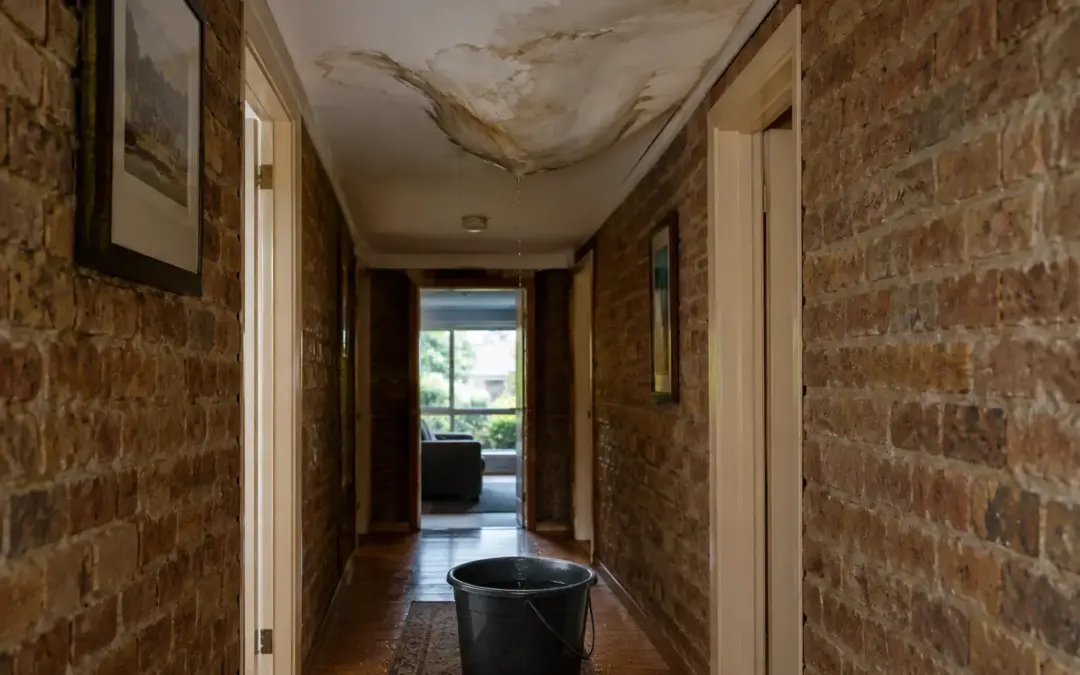
It rained hard overnight, and now there’s a brown ring on the hallway ceiling and a bucket underneath it. The first question most Canberra homeowners ask us in that moment isn’t about tiles or flashing. It’s this: does home insurance cover roof leaks, or is this one coming out of my own pocket?
The honest answer is that it depends on why the water got in. That is something you can usually work out before you lodge anything. We’re roofers, not insurers, so we can’t tell you what your particular policy says. Only your product disclosure statement (PDS) can do that. What we can tell you is what we find on Canberra roofs after a leak, how that evidence tends to be read, and how to give a genuine claim the best footing.
Insurers pay for the event, not the leak
Almost every Australian home policy draws the same line. Damage from a sudden, one-off event such as a storm, hail, a falling branch or a fire is generally covered. Damage that built up slowly is generally not. That means wear and tear, rust, perished mortar and anything put down to a lack of maintenance.
So two houses can have an identical stain on the same ceiling and get opposite answers. One had tiles knocked loose by a wind gust last Tuesday. The other has had cracked ridge pointing letting in a little more water every winter for years. From inside, the leaks look the same. The cause is completely different, and the cause is what the assessor writes down.
There’s a second split that catches people out. Fixing the roof and fixing the inside of the house are often treated as separate things. Some policies will pay for a wet ceiling or ruined carpet but not for repairing a part of the roof that had already worn out. Others decline both. Look in the exclusions section of your PDS for words like “gradual”, “wear and tear” and “maintenance” before you assume either way.
Most leaks we find were years in the making
When we get up on a roof after someone has been told their claim is “wear and tear”, we often find the assessor had a point. Canberra is hard on roofs in a slow, quiet way. Frosty winter nights followed by hot summer days make materials expand and shrink over and over, and that cycle works away at mortar, sealant and fixings for decades.
The usual suspects on an older Canberra roof:
- Cracked or missing ridge pointing (the mortar strip that holds the capping tiles along the top of a tile roof)
- Rusted valley irons, the metal channels where two roof slopes meet
- Flashings around chimneys, skylights and walls that have lifted or lost their sealant
- Gutters and box gutters packed with leaves, so water backs up under the roof edge
- Rust holes and loose screws on older metal roofs
- Tiles cracked by foot traffic from antenna, solar or air conditioning installers
None of these happen overnight. An assessor who sees heavy rust or crumbling mortar will usually conclude the storm simply found a weakness that was already there. When a homeowner tells us their claim was knocked back, this is the reason we hear most often.
When a roof leak claim usually stands up
Claims have a much better chance when there’s a clear, dated event behind the damage and the roof was in reasonable shape beforehand. Canberra gets its share of those events. Summer hailstorms crack tiles and dent metal. Strong winds lift ridge caps and sheets. Branches come down from the big established trees in older suburbs.
The signs of sudden damage look different from wear. Tiles have fresh breaks with clean edges. A metal roof has dents across it. A sheet or a run of capping has physically shifted, or there’s debris sitting on the roof. If the damage showed up straight after a known storm and the rest of the roof is sound, that’s exactly the situation home insurance is designed for. Our guide to what to do after a storm damages your roof covers those first few hours in more detail.
Five things to do before you ring your insurer
The order matters. Safety first, then evidence, then the claim.
- Stop the water spreading inside. Buckets, towels, and move furniture and electronics out of the way. If water is near a light fitting or the ceiling is sagging, switch off power to that area and keep everyone out of the room.
- Photograph everything, with dates. The ceiling, the wet floor, any tiles or debris in the yard. Don’t climb up to photograph the roof yourself, particularly while it’s wet.
- Get a roofer to find the entry point and make it watertight. Policies generally expect you to prevent further damage, and a temporary repair or tarp does that. Ask for photos from the roof and a written note on the cause.
- Keep the damaged materials. Broken tiles or bent flashing are evidence. Put them aside until your insurer says otherwise.
- Lodge the claim promptly. The longer you wait, the harder it is to tie the damage to a particular storm.
Before any permanent repairs go ahead, check with your insurer. Some want their own assessor to see the roof first, and some use preferred builders. A temporary fix to keep the rain out is a different matter, and it’s almost always expected of you.
A roofer’s report carries real weight
Assessors are often generalists covering a lot of claims. A clear report from a roofer who has actually been on your roof gives them something specific to work with: where the water got in, what broke, and photos showing whether the materials around it were sound or already failing.
We’d rather be straight with you about what we find. If a leak is clearly coming from a worn valley or old pointing, we’ll say so, because a report that stretches the truth tends to fall apart once an assessor climbs the ladder. If it’s genuine storm damage, the photos usually make the case on their own. Our roof repair team in Canberra can track down the leak, do a temporary fix and put the cause in writing for you.
If your claim is refused, you still have options
Ask the insurer for the reason in writing and a copy of the assessor’s report. If you think they’ve got the cause wrong, you can request an internal review, and a second opinion from a roofer can support it. If you’re still not satisfied after that, the Australian Financial Complaints Authority (AFCA) handles disputes with insurers free of charge.
Whatever happens with the claim, the leak still needs fixing, and soon. Water that keeps getting into a ceiling cavity soaks the insulation, stains the plaster and can eventually bring a ceiling down. The good news is that most gradual causes, such as repointing, a new valley iron or resealed flashing, are targeted repairs rather than a whole new roof. Our article on why Canberra roofs leak and how each cause gets fixed walks through them one by one.
Maintenance is the part of the policy nobody reads
Because insurers exclude damage caused by poor upkeep, a roof that has been looked after is easier to claim on when something genuinely goes wrong. That doesn’t mean constant work. It means clearing the gutters after the autumn leaf drop, having the roof checked every few years, and fixing small things like a cracked tile or lifting flashing before they become a wet ceiling.
Keep the invoices and photos from that work. If you ever need to show an assessor the roof was maintained, a dated record does the job better than anything you can say on the phone.
If you have a leak right now and aren’t sure whether it’s storm damage or age, get the roof looked at before you lodge the claim. You can book a free inspection with our Canberra roof leak specialists, and we’ll tell you plainly what caused it and what it will take to fix.
Straight answers about roof leaks and insurance
Does building insurance cover leaks?
Building insurance usually covers leaks caused by a sudden event such as a storm or hail, and many policies also cover water escaping from a burst pipe. It generally doesn’t cover leaks from wear and tear, rust or poor maintenance. Your PDS lists the exact exclusions for your policy.
Does home insurance cover roof leaks in Australia?
Australian policies broadly follow the same rule: sudden damage is covered, gradual deterioration isn’t. The wording, excesses and limits still differ between insurers, so the same leak can be treated differently by two companies. Read your own PDS rather than relying on a general answer.
What should I do if my roof is leaking?
Contain the water inside, switch off power near any wet light fittings and take dated photos. Then get a roofer to find where the water is getting in and make it watertight temporarily. Stay off a wet roof yourself.
What is the most common damage that home insurance does not cover?
Gradual damage is the big one: wear and tear, rust, rot, mould and anything put down to a lack of maintenance. On roofs, that usually means old pointing, rusted valleys and blocked gutters that have been overflowing for a while.
Will insurance pay to fix the roof or only the ceiling?
It depends on the cause and your policy. With genuine storm damage, the roof and the interior are usually both part of the claim. Where the roof had already worn out, some insurers cover the interior damage only and others decline the whole claim.
Should I get my roof repaired before the assessor comes?
Get a temporary repair done straight away to stop more water getting in, since insurers generally expect that. Hold off on permanent repairs until your insurer confirms whether they want to inspect first. Keep photos and any damaged materials either way.