
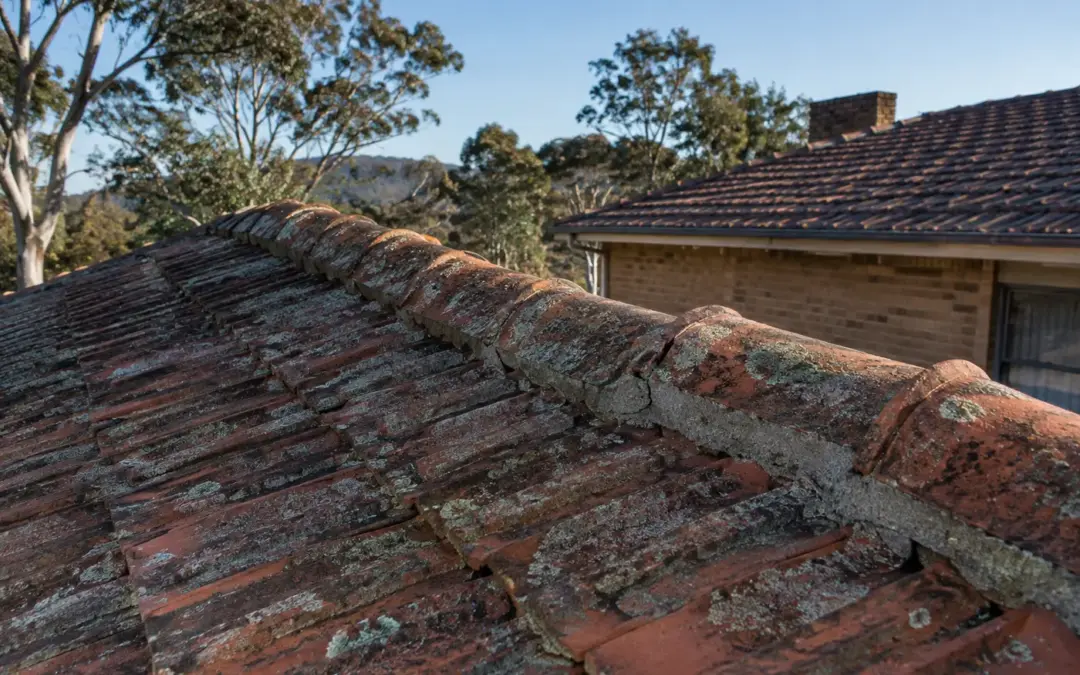
A question we get on almost every inspection goes something like this: “The tiles look fine from the street, so how long has this roof actually got?” Usually it comes from someone who has just bought a 1970s brick veneer in Belconnen or Tuggeranong, or someone who has lived under the same roof for 30 years and is starting to wonder. So, how long does a tile roof last? The honest answer is that the tiles and the roof are two different things, and they wear out on very different clocks.
The tiles usually outlive everything holding them up
Fired clay (terracotta) and concrete tiles are tough. The figures you will see quoted across the industry put terracotta somewhere around 50 to 100 years, and concrete a bit lower, with estimates commonly sitting between 40 and 60 years. Those numbers are reasonable for the tile itself, as long as nobody has walked across it in work boots.
The catch is everything else. A tile roof is a system: tiles, battens, sarking (the foil or membrane layer under the tiles), ridge capping, the mortar bedding and pointing that hold the ridges down, valley irons and flashings. Most of those parts have a much shorter life than the tiles. Bedding and pointing are commonly quoted at 15 to 20 years before they need redoing, and older sarking at 20 to 30 years.
So when someone tells you their tiles will last a century, they may be right. The roof as a whole will still need real work several times in that century.
Terracotta and concrete age in different ways
Terracotta has its colour baked right through the clay, so it fades very slowly and doesn’t depend on a surface coating. What it can do with age is become brittle, and older clay tiles crack more easily when someone steps on them or a branch drops.
Concrete tiles are a different story. The colour sits in a surface layer, and once that wears away the tile becomes more porous. It soaks up water, grows lichen and moss faster, and the surface slowly erodes. The tile is still structurally sound for a long time, but it stops shedding water as cleanly as it used to. That is the main reason concrete roofs get repainted and sealed during a restoration and terracotta roofs often don’t need to be.
If you’re not sure which you have, our guide to telling terracotta and concrete tiles apart covers the differences in more detail.
Canberra weather is harder on roofs than people expect
Canberra doesn’t get coastal salt spray, which helps. What it does get is a climate that works on a roof from both ends of the thermometer.
Winter frosts are the big one. When a porous tile takes on water and that water freezes overnight, it expands inside the tile. Do that over enough winters and the surface starts to flake and crack. We see this most on older concrete tiles that have lost their surface coating, and on cheaper terracotta that was never fully vitrified.
Summer brings the opposite problem. Hot days followed by cooler nights make tiles and mortar expand and contract over and over, and rigid cement pointing doesn’t like that. It cracks, lets water in behind the ridge caps, and eventually the caps work loose. Add in the occasional hailstorm, like the one that hit the city in January 2020, plus strong UV at our altitude, and you can see why a roof here doesn’t always reach the upper end of those national figures without some help.
Then there are the trees. A lot of established suburbs have big gums and oaks right over the roofline. Leaves block valleys and gutters, and shade keeps tiles damp long enough for lichen to take hold.
Signs your tile roof is running out of time
Age alone doesn’t tell you much. We’ve seen 50-year-old roofs in good shape and 25-year-old roofs that were struggling. These are the things we actually look for:
- Cracked or crumbling mortar along the ridges and hips, or ridge caps you can see sitting crooked
- Tiles that are cracked, chipped or slipped out of line
- Concrete tiles that have gone patchy and chalky, or rub off on your hand
- Heavy lichen and moss, especially on the shaded side
- Rusty or blocked valley irons
- Water stains on the ceiling, or daylight visible from inside the roof space
- Sarking that has gone brittle, torn or saggy when you look up from the manhole
One or two of these usually means repairs and maintenance. Several at once, across the whole roof, is when the bigger conversation starts.
Restore, repair or replace: what the age of your roof actually tells you
Most of the tile roofs we look at in Canberra don’t need replacing. The tiles are sound and the problems sit in the parts that are meant to be renewed. In those cases a full tile roof restoration deals with the worn components in one go: cleaning, replacing broken tiles, rebedding and repointing the ridges, and for concrete tiles, sealing and recoating the surface. That resets the clock on the parts that wear out, without paying to replace tiles that still have decades in them.
Replacement makes sense when the tiles themselves are failing in large numbers, when the battens or frame underneath have rotted, or when you want to change the roof entirely, for example going from tiles to Colorbond. If you’re weighing that choice, we’ve written about when restoring beats replacing and the trade-offs on each side.
The honest rule of thumb: if the tiles are sound, restoration is almost always the better value. If the tiles are breaking down, no amount of paint will save them.
What actually adds years to a tile roof
None of this is complicated, and most of it is cheap compared to fixing the damage it prevents.
Keep gutters and valleys clear, especially in autumn and after storms. Blocked valleys are behind a large share of the leaks we’re called out for. Get broken tiles swapped out early, before water has a chance to get into the battens. Have the ridges checked every few years and repointed with flexible pointing when the old mortar starts cracking; flexible pointing is a modern compound that moves with the roof instead of snapping like cement does.
And keep people off the roof who don’t need to be on it. A surprising amount of tile damage we find comes from antenna installers, solar crews and well-meaning relatives cleaning gutters from the top.
A proper look at the roof every few years, and after any big hailstorm, will catch most of this while it is still a small job.
Not sure how much life your roof has left?
We offer a free inspection, and we’ll tell you straight whether your roof needs a few repairs, a full restoration or something bigger. If a restoration is the right call, our work comes with an industry leading 15 year warranty. Get in touch about restoring your tile roof and we’ll arrange a time to take a look.
Common questions about tile roof lifespan
How often should you replace a tiled roof?
Far less often than most people assume. A well-maintained tile roof may never need a full replacement in the time you own the home. What it does need is periodic maintenance: ridge rebedding and repointing, broken tile swaps and, for concrete tiles, recoating every so often.
Do concrete tiles last as long as terracotta?
Generally not quite. Concrete tiles rely on a surface coating, and once that wears off they absorb more water and weather faster, which matters in a frosty climate like Canberra’s. Kept sealed and painted, they still give decades of service.
How long does it take to replace a roof tile?
Swapping a single broken tile is a quick job for a roofer, as long as a matching tile is available. The slower part is often finding a match for older or discontinued profiles. We keep that in mind during inspections and flag it early if your tiles are hard to source.
Does a roof restoration extend the life of a tile roof?
Yes, because it targets the parts that wear out first. Rebedding and repointing the ridges, replacing cracked tiles and sealing porous concrete all slow down the slow leaks and frost damage that shorten a roof’s life.
Which is better, Colorbond or tile?
Neither wins outright. Tiles are heavy, quiet in the rain and very long lived, while Colorbond is lighter, quicker to install and has fewer joints to maintain. The right choice depends on your home, your budget and whether the existing frame suits a change.
Is it worth restoring a 40 year old tile roof?
Often, yes. Plenty of Canberra roofs from that era still have sound tiles and simply need their bedding, pointing and surface renewed. An inspection will tell you whether the tiles and battens are in good enough shape to make restoration worthwhile.