
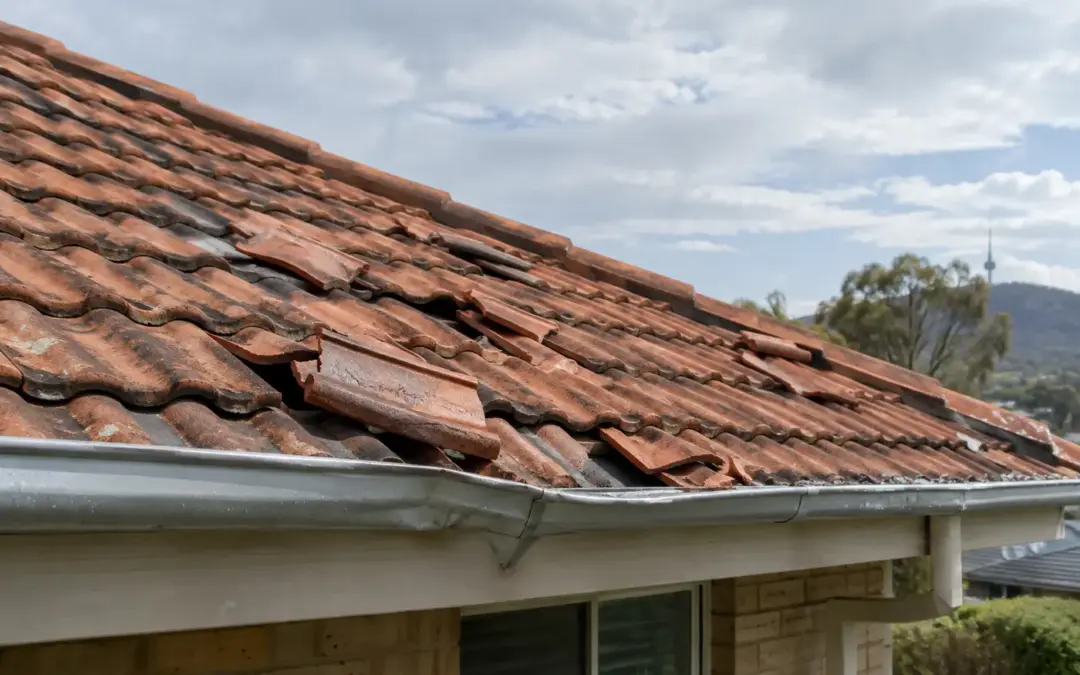
You wake up after a rough night, the wind has finally dropped, and there’s a brown ring spreading across the bedroom ceiling. Out on the lawn are a few broken tiles and a strip of something metal that used to be up on the roof. If that sounds familiar, you’re in the middle of exactly the situation this post is about. Storm damage roof repair in Canberra almost always starts like this, with a mess you didn’t ask for and a decision about what to do next.
We look at a lot of roofs after our summer hailstorms and the big spring winds roll through. Most of the panic is understandable, and most of it can be sorted with a clear head. Here’s how we’d walk a neighbour through it.
What a Canberra storm actually does to a roof
Damage is rarely just one thing. When we climb up after a storm, we usually find a combination of the following.
- Cracked or shattered tiles. Hail is the big one here. Terracotta and concrete tiles can take a knock, but a heavy hail cell will crack them outright, and a cracked tile lets water straight through to the sarking and timber below.
- Lifted or missing ridge capping. Strong gusts get under the caps along the roof line and shift them. Once the mortar or pointing cracks, the caps move every time the wind blows.
- Damaged flashing. The metal that seals around chimneys, valleys and wall junctions gets peeled up by wind. It’s a common leak point that people miss because it’s not obvious from the ground.
- Dented or blocked gutters. Hail dents them, wind fills them with leaves and twigs, and suddenly water is spilling over the edge and running down your walls instead of away from the house.
- Water already inside. Stains on ceilings, damp in the cornices, a musty smell in the roof space. That means the water got in some time ago and is only now showing.
Metal roofs cop it too, just differently. Hail dents Colorbond sheets and can chip the coating, and wind can lift sheeting at the ends if the fixings were already tired. We handle both tile and metal roofs, so the roof type changes the repair, not whether it can be fixed.
The first few hours: what to do, and what to leave alone
The single most important rule: stay off the roof. Wet tiles are slippery, storm-damaged sheeting is unstable, and a fall from roof height is far worse than any leak. Do your looking from the ground with your feet planted.
Here’s the order we’d suggest:
- Deal with water inside first. Move furniture clear, lift rugs, and put a bucket under any active drip. If the ceiling is sagging or bulging with trapped water, keep well back, because a full plasterboard sheet coming down is heavy and sudden.
- Take photos of everything before you touch it. Ceiling stains, broken tiles on the lawn, dented gutters, the lot. Your insurer will want this, and the more you capture early the smoother the claim.
- Turn off power to any area where water is near light fittings or wiring. If in doubt, leave it off and call an electrician.
- Walk the yard and note what’s come down. Tiles, capping, sheet metal and tree limbs on the ground all tell the story of what’s now missing up top.
What you shouldn’t do is climb up to “just have a quick look” or start pulling tarps around yourself in the wind. That’s how a bad day gets worse.
Make-safe first, proper repair second
Storm work usually happens in two stages, and it helps to know that going in.
The first stage is the make-safe, sometimes called an emergency repair. This is the fast, temporary fix that stops more water getting in while everyone waits for parts, weather and insurers. It might be a tarp over an open section, a temporary patch on flashing, or clearing a gutter so water drains. It isn’t meant to be pretty or permanent. It’s meant to protect the house tonight.
The second stage is the actual fix: replacing the cracked tiles, re-bedding and repointing the ridge capping, sorting the flashing, and making sure the roof is watertight and back to normal. We’d rather get the roof repairs done properly once than patch the same spot three times, so the permanent repair is where the care goes. If you’re weighing up the causes of ongoing leaks after the storm passes, our guide on why Canberra roofs leak and how we track the source is worth a read.
Repair, or is it time to replace?
Most storm damage is a repair. A dozen cracked tiles and some shifted capping is a normal day’s work, not a reason to redo the whole roof. But if the roof was already near the end of its life, brittle, faded and patched in a dozen places, a big storm can be the thing that tips it over from “repairable” to “time to plan a replacement”.
An honest inspection sorts that out quickly. We’ll tell you if a repair genuinely holds, or if you’d be throwing money at a roof that needs replacing within a year or two. If you’re already wondering which way yours will go, we’ve written a full breakdown on whether to restore or replace a Canberra roof.
How a roof insurance claim usually works
Storm and hail damage is one of the things home insurance is actually built for, so don’t assume you’re on your own with the bill. Here’s the shape of it.
Call your insurer early and start the claim. Give them the photos you took and describe what happened and when. They’ll usually ask for a report from a roofer, which is where an inspection comes in: a proper written assessment of the damage, what caused it, and what the repair involves. That report is what turns “I think a storm did this” into a claim an assessor can approve.
A few things worth knowing. Insurers treat sudden storm damage very differently from slow wear and tear, so the timing and the photos matter. Keep receipts for any emergency make-safe work, because that’s often covered too. And be wary of anyone who knocks on your door straight after a storm pushing you to sign on the spot. The reputable path is simple: get your own inspection, get it in writing, and deal with a local business you can find again next year.
We offer a free roof inspection, so getting that first assessment done doesn’t have to cost you anything while you’re sorting out the claim.
Getting storm damage roof repair sorted in Canberra
Canberra roofs take a beating that milder parts of the country don’t see. Hard summer hail, cold snaps, frost, and those spring gusts that seem to find every loose tile. That mix is exactly why storm repairs are such a regular part of what we do here, from Belconnen through to Tuggeranong. The work is straightforward when it’s done by people who know local roofs, back it properly, and turn up when they say they will.
If a storm has knocked your roof around, the sooner it’s looked at the less chance a small leak becomes a ruined ceiling. Book a free inspection with our Canberra roof repair team and we’ll assess the damage, make it safe, and give you a clear written report you can hand straight to your insurer. Every repair is backed by our 15-year workmanship warranty, so the fix lasts well beyond the next storm.
Common questions about storm and hail damage
What should I do if my roof is leaking during a storm?
Contain the water inside with buckets and move anything valuable out of the way, keep clear of any bulging ceiling, and switch off power near wet fittings. Don’t go up on the roof while it’s wet or windy. Photograph everything, then call a roofer for an emergency make-safe once conditions allow.
Can you claim insurance on a leaking roof?
Usually yes, if the leak was caused by a sudden event like a storm or hail. Insurers tend to cover sudden damage but not gradual wear and tear, so a written roofer’s report showing the storm caused it makes a big difference to whether the claim is approved.
How much should I expect to pay for storm roof repairs?
It depends entirely on what’s damaged, from a handful of cracked tiles up to re-bedding capping and replacing flashing. Rather than guess, get an inspection and a written quote, and check whether your insurance covers the work. Our roof inspection is free, so you can find out where you stand before committing.
How long do storm roof repairs take?
An emergency make-safe can often happen the same day or the next, weather permitting. The permanent repair depends on materials and how much needs replacing, so a few cracked tiles is quick while widespread hail damage takes longer to do properly.
Should I repair or replace a storm-damaged roof?
Most storm damage is a repair. Replacement only makes sense when the roof was already near the end of its life and the storm was the final straw. A proper inspection tells you which one you’re actually looking at, so you’re not replacing a roof that had years left in it.
Is hail damage to a roof covered by insurance?
Hail is a common covered event on most home policies, since it’s sudden and weather-driven. As always, document it well with photos and a roofer’s assessment, and lodge the claim promptly rather than waiting until the next rain shows the leaks.