
A brown stain shows up on the ceiling after a night of heavy rain. You ring three roofers, and the prices that come back are so far apart they could be for three different houses. One wants to swap a couple of tiles. Another wants to rebuild a whole ridge line. The third won’t give a number until they’ve been up there.
That gap is the most common thing people ask us about, so this guide explains what really sets roof repair cost in Canberra, why quotes differ, and how to tell a fair price from a cheap one that will cost you twice. We won’t pretend there’s a single figure that fits every roof. There isn’t, and anyone who quotes one over the phone is guessing.
Nobody honest can price a repair over the phone
Most of the cost of a roof repair is decided by things you can’t see from the ground. A drip over the hallway might come from a cracked tile right above it. It might also come from a rusted valley two metres uphill, with the water running along the sarking (the membrane under the tiles) before it finds a way through. Same stain, very different job.
So the first part of any repair is finding the real source. On a straightforward leak that takes minutes. On an older roof with several possible entry points, it can take longer than the fix itself. A roofer who skips that step and quotes from your description is pricing the symptom, not the problem.
Five things that actually move the price
What’s broken, and what’s behind it
A single slipped tile is a small job. A cracked tile that has let water sit on the battens for a few winters is a bigger one, because the timber underneath may need attention too. We often find that the visible damage is the cheap part and the hidden damage is where the money goes.
Tile or metal
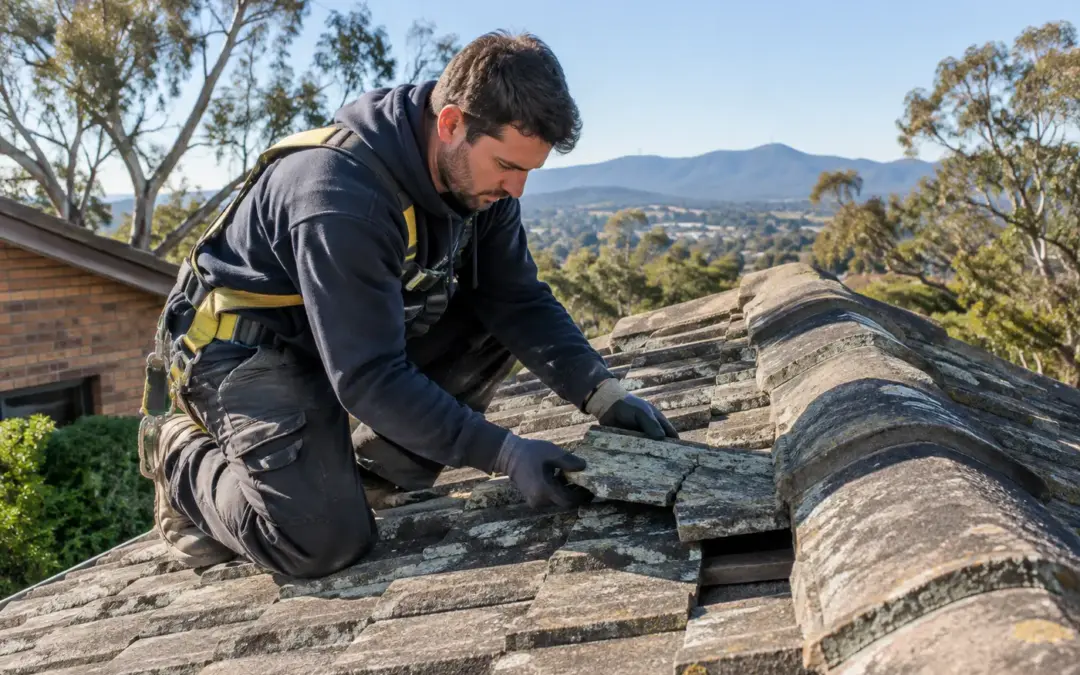
On tiled roofs the cost usually comes down to bedding and pointing (the mortar and flexible compound that hold ridge caps in place), plus how many tiles need replacing and whether we can match them. Older terracotta and some discontinued concrete profiles are harder to source, which can affect both price and timing.
Metal roofs fail differently. We see loose or rusted screws, lifted sheets, perished washers and corrosion where flashings meet the sheeting. A handful of new fasteners is quick work. Replacing rusted sheets means ordering material in the right profile and colour, and that changes the numbers.
Height, pitch and access
A single-storey roof with a gentle pitch is the easiest kind of roof to work on. A steep roof, a two-storey house, or a roof that sits over a pool or a tight side passage needs more safety gear and more setup time. That isn’t padding. It’s what it takes to do the work without anyone getting hurt.
How much of the roof is involved
Repairing one ridge cap and repointing an entire ridge line are not the same job, even though both get called “ridge repairs”. The same goes for valleys: patching a small rust spot is one thing, but replacing a full length of valley iron is another. Always check what length or area a quote actually covers.
Materials and matching
Flexible pointing compound, replacement tiles, new valley iron, flashings and fasteners all cost different amounts, and quality varies. A cheaper product can look identical on the day and fail years sooner.
Small fixes, bigger repairs, and where repair stops making sense
It helps to think of roof repairs in three rough tiers.
Small fixes are things like replacing a few broken tiles, resealing a flashing, or tightening and replacing a run of screws on a metal roof. These are usually done in a single visit.
Bigger repairs include rebedding and repointing ridges, replacing valley irons, renewing flashings around a chimney or skylight, or replacing several damaged metal sheets. More materials, more time on the roof, and sometimes more than one day.
Repeated repairs are the warning sign. If you’re calling someone out every winter for a different leak, the roof is telling you something. At that point the money spent on patching can add up to more than a proper fix would have cost. Our guide to deciding between restoring and replacing a roof covers how to weigh that up honestly.
When we inspect a roof, we tell you which tier you’re in. Most of the time a targeted repair is the right answer. Sometimes it isn’t, and you deserve to hear that before you spend money, not after.
Why the cheapest quote can end up the dearest
The quote that comes in well under the others usually got there by doing less. Common shortcuts we see on Canberra roofs include silicone smeared over a cracked tile instead of replacing it, new pointing laid straight over old, crumbling bedding, and a leak “fixed” at the spot where it dripped rather than where it got in.
None of these look bad from the ground. They tend to fail at the worst possible time, during the next big storm, and then you’re paying for the same repair again plus any ceiling damage in between.
This isn’t a case for always picking the most expensive quote either. It’s a case for comparing what each quote includes, line by line.
What a fair quote should spell out
A good repair quote is specific enough that you could hand it to another roofer and they’d know exactly what was promised. Look for:
- The cause of the problem, not just the symptom
- Exactly what will be replaced, with quantities or lengths
- The materials being used
- Whether old bedding or rusted iron is being removed or covered over
- Any extra damage found and how it will be handled
- Clean-up and removal of old materials
If a quote just says “fix leak” with a number next to it, ask more questions before you agree to anything. You can see the kinds of jobs we cover on our Canberra roof repairs page, from single tiles through to valleys and flashings.
Canberra weather makes small problems grow faster
Our climate is hard on roofs in ways that coastal cities don’t see as much. Frosty winter nights followed by sunny days mean constant expansion and contraction, which works mortar loose and opens up hairline cracks in tiles. Summer storms can bring hail and strong winds that lift tiles or dent sheeting. And many suburbs have big established trees that drop leaves into valleys and gutters, which holds water against the metal and speeds up rust.
The practical result: a small crack or a bit of loose pointing doesn’t stay small for long here. A repair that would have been quick in autumn can be a bigger job by spring, after a winter of freeze and thaw. If you’ve got a leak right now, our post on tracking down why a roof leaks walks through the usual culprits.
Ways to keep the bill down without cutting corners
Book repairs early. The cheapest repair is almost always the one done before water has reached the timber or the ceiling.
Bundle jobs into one visit. If you know the gutters need attention and a couple of tiles are cracked, getting it all done while someone is already on the roof avoids paying for setup twice.
Keep gutters and valleys clear. Blocked gutters and leaf-filled valleys cause a surprising share of the leaks we’re called to, and they’re the easiest problem to prevent.
Ask for photos. A roofer who shows you pictures of what they found makes it much easier to judge whether the work quoted is the work needed.
And get the source found properly the first time. Paying a little more for a careful diagnosis beats paying twice for a guess.
Common questions about roof repair costs
How much on average does it cost to fix a leaking roof?
It depends on where the water gets in and how long it has been getting in. A leak from one cracked tile or a lifted screw is a small job, while a leak from a rusted valley or failed chimney flashing involves more material and time. Any damage to battens or ceilings adds to it, which is why fixing leaks early saves money.
Is it cheaper to repair or replace a roof?
For most roofs with isolated damage, repair is far cheaper. Replacement starts to make sense when the roof needs constant repairs, the tiles or sheets are failing across large areas, or the structure underneath has deteriorated. A good inspection should tell you which situation you’re in.
What is the average lifespan of a roof?
It varies with the material, how well the roof was installed, and how well it has been maintained. Tiles themselves can last a very long time, but the bedding, pointing and flashings around them need attention much sooner. Metal roofs last longest when fasteners, flashings and valleys are looked after and debris isn’t left sitting on them.
How much does metal roof repair cost in Canberra?
Small metal roof repairs such as replacing screws and washers or resealing a flashing are usually quick. Costs climb when sheets have rusted through and need replacing, because new sheeting has to match the existing profile and colour. Access and roof height also play a big part.
Does home insurance cover roof repairs?
That depends on your policy and the cause. Sudden damage from a storm or hail is often covered, while wear and tear such as old pointing or gradual rust usually isn’t. Check your policy wording and talk to your insurer before work starts if you think you have a claim.
Why do roof repair quotes vary so much?
Usually because the roofers are quoting different jobs. One may be patching the visible symptom while another is fixing the underlying cause and any hidden damage. Compare what each quote includes, not just the final figure.
If you’ve spotted a stain, a slipped tile or a bit of rust and want to know what you’re actually dealing with, we can take a proper look and tell you plainly. Head to our roof repair service to get in touch and we’ll explain what we find before any work is booked.