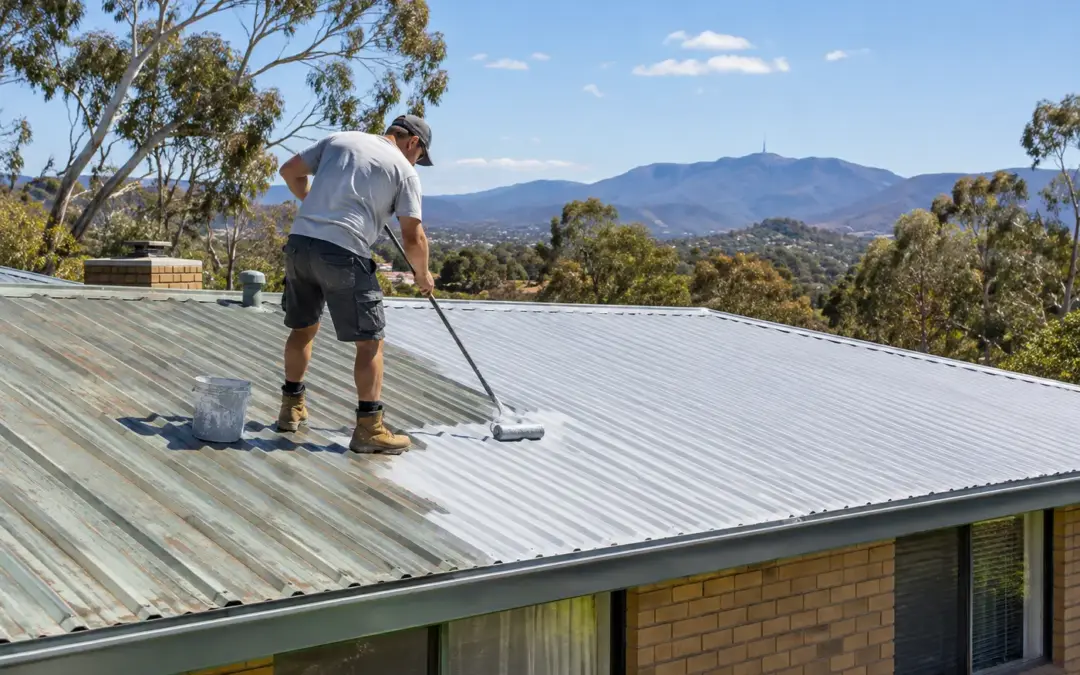
Every summer we get the same call. Someone in a single storey brick house in Kambah or Belconnen tells us the back bedrooms are unbearable by four in the afternoon, the air conditioner is running flat out, and they have seen ads for heat reflective roof paint. Is it worth putting on when the roof gets repainted?
Sometimes yes. Sometimes it makes very little difference. Heat reflective roof paint in Canberra is a slightly different decision to the one people face in Brisbane or Perth, because we spend more of the year trying to keep heat in than keep it out. Here is how we think it through with homeowners.
What makes a coating “heat reflective”
All roof paint reflects some sunlight. Heat reflective coatings (often sold as “cool roof” products) use special pigments that bounce back far more of the infrared part of sunlight, which is the part you feel as heat rather than see as colour. The number manufacturers quote is called TSR, or total solar reflectance. Higher TSR means a cooler roof surface on a sunny day.
The clever bit is that these pigments work in darker colours too. A charcoal reflective coating will usually run cooler than a standard charcoal paint, although it will never match a pale grey or off white. Colour still does most of the heavy lifting. The reflective technology narrows the gap.
Canberra’s winters are the catch
This is the part most product brochures skip, because most of them are written for hotter cities.
A roof that rejects summer heat also rejects some of the winter sun that would otherwise warm it a little. In Brisbane, nobody cares. In Canberra, where frosty mornings run for months and heating bills are usually bigger than cooling bills, it is a fair question.
The honest answer is that the winter penalty tends to be small. The sun sits low through June and July, the days are short, and a properly insulated ceiling stops most roof warmth reaching the rooms anyway. But it does mean the summer benefit has to do real work to justify the extra cost, and in some homes it simply doesn’t. That is why we don’t recommend it to everyone.
Where we have seen it make a real difference
The houses that benefit most share one thing: heat gets from the roof sheet into the living space quickly. That tends to mean:
- metal roofs, especially older Colorbond or galvanised roofs in dark colours
- raked or cathedral ceilings with little or no roof space above
- extensions and sunrooms with thin ceiling insulation
- ducted air conditioning that runs through the roof space
- no sarking or foil under the roofing
That ducted system point surprises people. The ducts sit in the hottest part of the house, so a cooler roof space means the air arriving at the vents is cooler too. If your system struggles on hot days and the ducts are in the ceiling, a reflective coating is one of the few roof changes that helps directly.
Metal roofs are where we see the clearest results. A steel sheet has almost no thermal mass, so it heats up within minutes of full sun and passes that heat straight down. If you have an older metal roof due for a repaint, our guide to restoring a metal roof in Canberra covers the prep work that has to happen before any coating goes on.
Where it probably isn’t worth paying extra
Concrete and terracotta tiles behave differently. They are heavy, they soak up heat slowly and release it slowly, and the air gaps between tiles let the roof space breathe. A reflective coating on tiles still lowers the surface temperature, but the change you feel inside is usually smaller than on metal.
It also matters less if:
- your ceiling insulation is thick and in good condition
- the roof sits under a mature tree canopy, which is common in older suburbs like Ainslie, Yarralumla and Hughes
- you are already choosing a light colour
On a well insulated, shaded tile roof, we will tell you the money is better spent elsewhere. Topping up ceiling insulation often does more for both summer and winter comfort than any paint can.
Light colour or reflective coating: which does more?
If you want the coolest roof possible, pick a light colour. A standard light grey will often outperform a dark reflective coating. The reflective products earn their keep when you want, or need, a darker colour. Plenty of homeowners don’t want a pale roof on a dark brick house, and some estates have colour rules.
A few practical trade offs we talk through:
- Dirt and lichen. Any roof loses reflectance as grime builds up, and light roofs show it sooner. Canberra’s lichen and dust settle on everything, so plan on cleaning it.
- Glare. A very pale roof can throw glare into a neighbour’s upstairs windows, especially on low pitched roofs.
- Street appeal. The roof is a big part of how the house looks from the street. Comfort matters, but so does liking the result for a long time.
A reflective topcoat won’t fix a tired roof
This is where we see people get burnt. A reflective coating is a paint system. It goes on over the same prep as any other roof painting job, and it fails in exactly the same ways if that prep is skipped.
On a tile roof, that means a thorough clean, replacing cracked tiles, and repointing loose ridge capping before any sealer goes on. On metal, it means treating rust, replacing failed screws and making sure the primer suits the surface. Painting over lichen, rust or broken tiles just traps the problem under a fresh colour. If you want a sense of whether your roof is ready for paint at all, our post on whether roof painting is worth doing walks through the warning signs.
When we quote a repaint, the reflective option is usually a choice of topcoat on the same job. The cleaning, repairs, access and labour stay the same either way, so the extra cost sits mainly in the price difference of the paint itself. That makes it easier to compare the two options side by side.
How we help you decide
We start with a free inspection. We look at the roof material and its condition, the colour you have now, how much shade it gets, and what we can see of the insulation and roof space. If you have ducted cooling or raked ceilings, we take that into account too.
Then we give you a straight recommendation. If a light standard colour will get you most of the benefit, we will say so. If a reflective coating is the right call, we will explain which colour range makes sense for your house. Either way, the work is covered by our 15 year warranty.
If your roof is due for a repaint and the house cooks every summer, book a free inspection through our Canberra roof painting service and we will tell you honestly whether reflective paint is worth it for your place.
Common questions about heat reflective roof paint
Is solar reflective paint any good?
It works, but how much you notice depends on the house. On a metal roof with thin insulation or ducts in the roof space, the difference can be obvious on hot afternoons. On a shaded, well insulated tile roof, you may barely feel it.
Is heat reflective roof paint worth it for a metal roof?
Metal roofs are where it makes the most sense, because steel heats up fast and passes that heat straight into the roof space. If you are repainting a metal roof anyway and want a mid or dark colour, the reflective version of that colour is usually worth considering.
What is the best colour to deflect heat?
Lighter colours reflect the most heat, with off whites and pale greys at the top. Reflective pigments make darker colours cooler than they would otherwise be, but a light standard colour often still beats a dark reflective one.
What are the benefits of painting a roof white?
A white roof stays the coolest in summer and can reduce how hard your cooling has to work. The downsides in Canberra are that it shows dirt and lichen quickly, can cause glare for neighbours, and gives up a little free warmth on winter days.
Is coating your roof a good idea?
Coating is a good idea when the roof is structurally sound and the old finish has worn out. It is not a fix for cracked tiles, rusted sheets or failed pointing, so those repairs have to happen first or the new coating will fail early.
Do you have to prime a metal roof before painting?
Yes. Bare or rusted areas need treating and the whole surface needs the correct primer for the metal type, whatever topcoat you choose. Skipping primer is one of the most common reasons metal roof paint peels.