
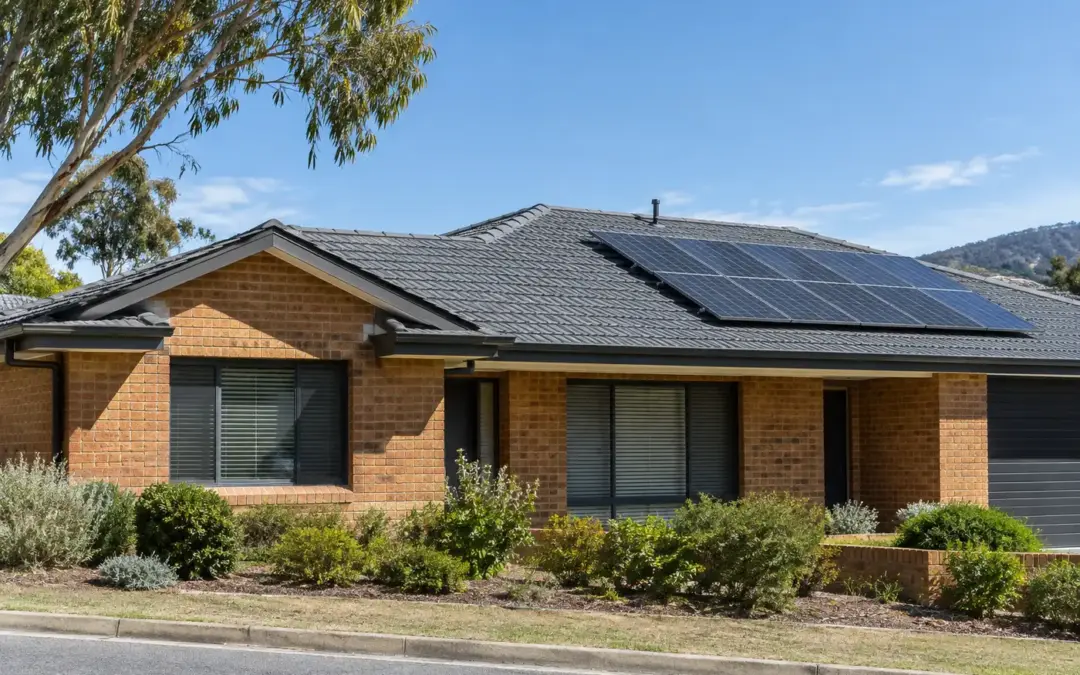
Most people choosing roof paint colours in Canberra start the same way. They hold a small swatch up against the brickwork, squint at it from the driveway, and pick the one that looks right. Then the roof gets painted and it looks two shades lighter than they expected. A chip the size of a business card tells you very little about how a colour will behave across a whole roof under a big, bright Canberra sky.
We have this conversation on almost every repaint we quote. Here is how we help owners land on a colour they are still happy with years later, and the few mistakes that are hard to undo once the topcoat is on.
Your roof will look lighter than the colour chip
Colours read lighter over a large area. That is true of walls, and it is even more true of a roof, because it faces the sky and catches direct sun for most of the day. A charcoal that looks almost black on a swatch can come across as a mid grey once it covers a hipped roof.
So if you want a deep colour, go one shade darker than your first instinct. Better still, find a roof already painted in the colour you like. Drive around your own suburb, note the street, and look at it in the morning and again late in the afternoon. A real roof at the right distance beats any brochure or online visualiser.
Still torn? Ask whoever paints your roof to coat a couple of spare tiles or an offcut of sheet in your two front runners. Prop them up in the garden and live with them for a few days.
Light colours run cooler, dark colours hide the grime
This is the real trade-off, and there is no free lunch.
A lighter roof reflects more of the summer sun, so less heat soaks into the roof space and down through the ceiling. In a Canberra January, with the sun beating on a north facing roof, that difference is something you can feel in the rooms below. If keeping the house cool is high on your list, a light or mid grey is the sensible choice. We go through the coating side of this in our post on heat reflective roof paint and whether it pays off.
Darker roofs have a practical upside too. Canberra roofs collect a lot of dust, pollen and leaf litter, and plenty of homes sit under gum trees that drop staining debris. Lichen and black mould also creep back on shaded sections over time. All of that shows up far more on a pale roof. A charcoal or deep grey hides it well and tends to look tidy for longer between washes.
For most of the homes we work on, the answer sits in the middle: a mid grey or a soft, warm grey. It keeps some of the heat benefit of a light roof and does not advertise every leaf.
Start with the parts of the house you are not changing
A roof colour has to work with things that are staying put. Before you open a colour chart, stand across the street and take stock of:
- the brick or render, including the mortar
- gutters, fascia covers and downpipes
- window and door frames
- solar panels (dark, and sitting right on top of whatever you choose)
- the garage door and front fence
Gutters catch people out more than anything else. If your gutters and fascia are staying, the roof either needs to match them or contrast with them on purpose. A roof that is nearly the same grey as the gutter, but not quite, looks like a mistake. If the gutters are due for replacement anyway, sort that out before the roof paint goes on so you can choose the two colours together.
As a rough rule, a roof darker than the walls looks grounded and settled. A roof lighter than the walls can work on a modern rendered home, but on most brick houses from the 1970s and 80s it tends to look washed out.
Tile and metal roofs give you different choices
On a concrete tile roof, the colour comes from the membrane coating applied after the tiles are cleaned and the ridge capping has been repointed. Roof coating manufacturers offer wide ranges, and most include heat reflective versions of their popular greys. You can move a long way from the original colour on concrete tiles. A tired red roof can become a modern charcoal without any trouble.
Terracotta is different. Unglazed terracotta can be coated, but many owners choose not to, because the natural colour is a big part of why they like the roof. Glazed terracotta is generally a poor candidate for paint, because the coating struggles to grip the glaze. If you are not sure which you have, that is something we check on inspection, and our guide to terracotta versus concrete tiles covers how to tell them apart.
On a Colorbond or other metal roof, most owners stay close to the standard Colorbond palette when they repaint. There is a good reason for that. If a sheet, flashing or ridge cap ever needs replacing, the new piece will come in a standard colour, and it will blend in far better if the roof is already painted to match one.
Estates and heritage areas may limit your options
Some newer Canberra estates have design guidelines that cover external colours, and heritage precincts in the older inner suburbs can restrict changes to the look of a house. If your home falls into either group, check what applies before you commit to a colour. A quick look now is far easier than repainting later.
Even where nothing is written down, think about the street. A roof that sits comfortably alongside the neighbours tends to help when you sell. A bold colour you love is fine, as long as you plan to stay a while.
Five checks before you sign off on a colour
When we are on site for a roof painting quote, we look at the roof material, the condition of the surface and what is staying on the house, then talk through colour with all of that in mind. The short version of the advice we give most owners:
- Narrow it to two or three colours, not ten
- See each one on a real roof, ideally in your suburb
- Hold the samples against your gutters, brick and solar panels
- Go a shade darker than you think for a deep colour
- Confirm estate or heritage rules before any paint is ordered
Colour is the fun part of a roof repaint, but it sits on top of the preparation work underneath. A beautiful colour over poorly cleaned tiles or cracked pointing will not last. That is why we always start with the roof itself and come to the colour chart second.
Get a second opinion before the paint is ordered
If your roof is due for a fresh coat and you want advice on colour from people who look at Canberra roofs every day, book a free inspection. We will check the condition of the roof, tell you honestly whether it is ready for paint, and help you settle on a colour that suits the house. Find out more about our roof painting service in Canberra.
Common questions about roof paint colours
What is the best colour to paint a roof in Canberra?
There is no single best colour, but mid greys suit most Canberra homes. They reflect more summer heat than charcoal or black, and hide dust, leaf litter and lichen better than very pale shades. If cooling is your top priority, go lighter. If a tidy look between cleans matters more, go darker.
Should a roof be lighter or darker than the house?
On most brick homes, a roof darker than the walls looks more balanced. A lighter roof can work on a modern rendered home with a clean, simple style. Whatever you choose, make sure the roof relates to the gutters and fascia, either by matching them or clearly contrasting.
What is the most popular roof colour in Australia?
Greys, from soft mid greys through to deep charcoal. They work with a wide range of brick and render colours and sit well next to solar panels. On the roofs we repaint around Canberra, a grey of some kind is by far the most common choice.
Do dark roofs make a house hotter?
Yes. A dark roof absorbs more of the sun’s heat, and some of that finds its way into the roof space and the rooms below. Good ceiling insulation reduces the effect, and heat reflective versions of darker colours narrow the gap, but a lighter roof will still run cooler in summer.
Can you change the colour of a Colorbond roof?
You can. A metal roof in sound condition can be cleaned, prepared and painted in a new colour. It is worth choosing a colour close to a standard Colorbond shade, so any future replacement sheets or flashings blend in without needing to be painted.
Will a lighter roof show more dirt?
It will. Pale roofs show dust, leaf staining and the dark patches of lichen or mould much sooner than darker ones, especially on shaded sections under trees. If your home sits under gum trees, a mid or darker grey is usually the more practical choice.