
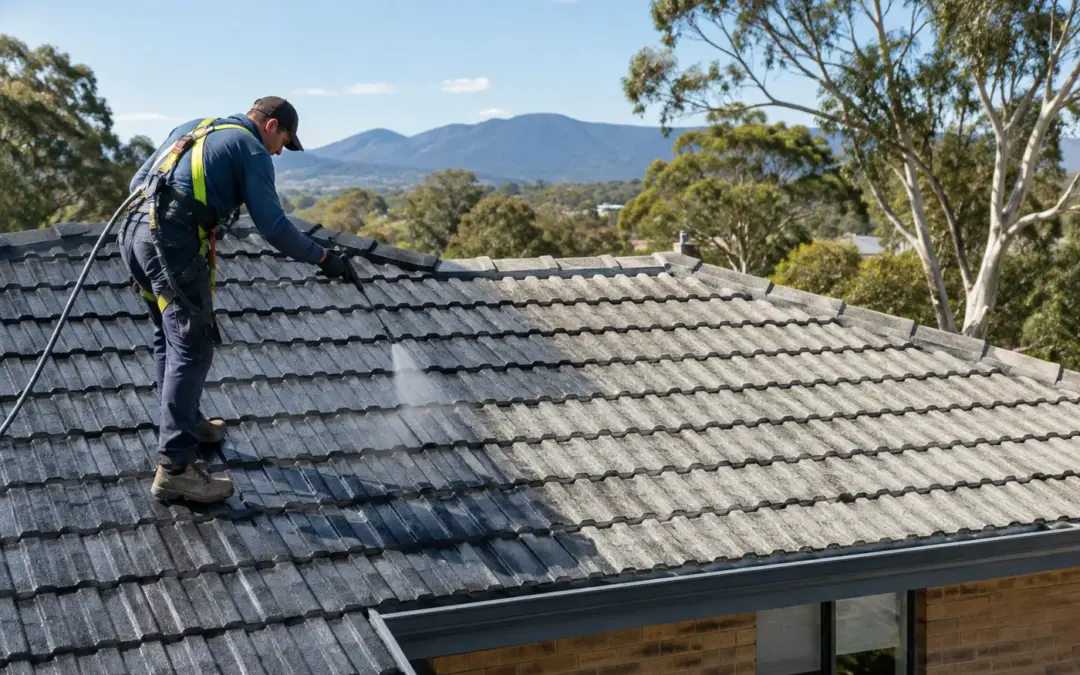
It usually starts with a flyer in the letterbox or a knock on the door. Someone offers to “seal your tiles” for a tidy price, and the homeowner wants to know if tile roof sealing is a real fix or just a sales pitch. Fair question. The honest answer is that sealing can be worth doing on the right roof, done the right way. On the wrong roof, or done on its own as a quick spray, it mostly makes the tiles look better for a while.
Here is how we look at it when we are standing on a Canberra roof, and the questions worth asking before anyone gets the sprayer out.
“Sealing” means different things depending on who is quoting
This is where a lot of the confusion comes from. When three people quote you for sealing, they may be selling three different jobs.
For some, it means a clear penetrating sealer. It soaks into the surface of the tile, cuts down how much water the tile absorbs, and leaves the colour as it is. For others, sealing is the first coat of a proper roof coating system: a primer or sealer coat that binds the old, chalky surface, followed by two coloured topcoats. And for a few operators, sealing means a single coloured coat sprayed straight over a quick wash. That last one is the version that gives the whole idea a bad name.
So the first thing to pin down on any quote is simple: what product, how many coats, and what happens to the roof before the first coat goes on.
Sealing won’t stop most leaks, because tiles rarely leak through their faces
This one surprises people. A tiled roof is a water shedding system. The tiles overlap, water runs down them into the gutters, and on many homes a layer of sarking underneath catches whatever gets blown past. Water does not usually get in by soaking straight through a sound tile.
When we track down a leak on a tile roof, the cause is far more often a cracked or slipped tile, crumbling pointing along the ridge capping, a rusted or blocked valley, or tired flashing around a chimney or skylight. A coat of sealer does not fix any of those. Spray sealer over a cracked tile and you have a shiny cracked tile.
That is why we never treat sealing as a leak repair. The repairs come first. If the roof is leaking in heavy rain, someone needs to find where the water is getting in before anything is sprayed on top.
Where sealing earns its keep: older concrete tiles
Concrete tiles are made from sand and cement, with the colour in a surface layer. When they are new, that surface does a good job of shedding water. Over the years, sun and weather wear it away. You can see it happening: the colour fades, the surface turns rough and sandy, and moss and lichen find it much easier to take hold.
Once that surface has gone, the tile is more porous. It soaks up more water after rain, stays damp longer, carries more weight when wet, and grows more moss. A good sealer or primer, followed by topcoats, puts back the protective skin the tile has lost. On a sound concrete roof with a worn surface, that is a sensible investment, and it is the main reason we include a sealing coat in a full tile roof restoration rather than painting straight onto bare, weathered concrete.
Terracotta is a different story
Terracotta tiles are fired clay. Many are glazed, and a glazed terracotta tile already has a hard, glassy face that sheds water well for a very long time. It does not need sealing, and coatings do not grip a glazed surface well anyway. Putting paint on a sound glazed terracotta roof is usually money spent making a good roof worse.
Unglazed terracotta is more absorbent, and some owners choose a clear sealer to cut down on moss and keep the natural colour looking fresh. That can be reasonable. What matters more on most terracotta roofs we see is everything around the tiles: the bedding and pointing on the ridges, broken tiles, and the valleys. If you are not sure which tile you have, our guide to telling terracotta and concrete tiles apart is worth a read, because the right advice depends on it.
Canberra’s frosty winters are the local reason this matters
Coastal advice on sealing tends to skip something that matters a lot here. Canberra gets cold, frosty nights through winter. When a porous tile soaks up water and that water freezes, it expands inside the tile. Repeat that night after night over many winters and the surface of a weathered concrete tile can flake and break down faster.
Cutting down how much water the tile takes on is the practical benefit of sealing in our climate. It is not a cure for a tile that is already crumbling, and a badly cracked or flaking tile should be replaced, not coated. But on a roof that is sound underneath and just worn on top, a proper seal and coating helps slow that wear.
A quick spray and a full restoration are not the same job
If you take one thing from this post, make it this. The value of sealing depends almost entirely on what happens before it.
A proper job on a concrete tile roof looks like this:
- a thorough clean to remove moss, lichen and loose surface material
- replacing cracked or broken tiles
- rebedding and repointing the ridge capping where it needs it
- checking valleys and flashings
- a sealer or primer coat, then two topcoats, once the roof is clean and dry
Skip the cleaning and the sealer sits on top of moss and dust, then peels. Skip the repairs and you have a nice looking roof that still leaks. A single coat sprayed over a quick wash is the job that tends to look tired again within a few years, and it is often what those cheap letterbox offers are pricing. If you are weighing up coating the roof mainly for looks, our post on whether roof painting pays off in Canberra covers that side of the decision.
Hardware store sealer can work, but the drum is the easy part
We understand the appeal. A drum of roof sealer and a sprayer looks cheaper than a contractor, and on a single storey roof with a gentle pitch, a careful owner can physically do it.
The trouble is that the product is the easy part. The cleaning, the repairs, the dry weather window and the safety gear are the hard parts. Wet tiles are slippery, concrete tiles crack when walked on in the wrong place, and a fall from a roof is a serious injury. If you do go the DIY route, fix any broken tiles and pointing first, and never spray over moss.
Get these answers in writing before you pay anyone
What product will be used, and is it a clear sealer or a pigmented coating? How many coats? How will the roof be cleaned, and what repairs are included? What warranty comes with the work, and what does it actually cover?
Then ask whether your roof needs sealing at all. A good roofer will tell you when it doesn’t. Glazed terracotta in good condition, or a concrete roof so far gone that replacing tiles would be smarter, are both cases where sealing is the wrong spend.
Common questions about sealing a tile roof
Is roof sealant a good idea?
On weathered concrete tiles that are otherwise sound, yes, as long as it is part of a proper process with cleaning and repairs done first. It cuts down water absorption and moss growth. On glazed terracotta in good shape, it is usually unnecessary.
Can a tile roof be sealed?
Yes. Concrete tiles are the most common candidates, and unglazed terracotta can take a clear sealer. Glazed terracotta is the exception, because coatings struggle to bond to the glaze and the tile rarely needs the help.
Will sealing stop my tile roof leaking in heavy rain?
Almost never on its own. Leaks in heavy rain usually come from cracked tiles, failed ridge pointing, valleys or flashings, and those need repairing. Sealing protects the tile surface. It is not a leak repair.
Do you need a membrane under roof tiles?
That membrane is called sarking, and it is a separate thing from sealing the outside of the tiles. It catches water and dust that blow past the tiles. Plenty of older Canberra homes don’t have it, and our guide on whether a tile roof needs sarking explains when it is worth adding.
How much does it cost to seal a tile roof?
It depends on the size and pitch of the roof, the tile type, how much cleaning and repair is needed first, and whether you are getting a clear sealer or a full coating system. Quotes vary widely because they often describe very different jobs, so compare what is included rather than just the bottom line.
Can I use a roof sealer from the hardware store myself?
You can, but the result depends on the preparation, not the product. The roof has to be properly cleaned, repaired and dry before the sealer goes on, and working on tiles is risky without the right safety gear. Preparation is where most DIY jobs fall short.
Not sure whether your roof would benefit from sealing, or whether it needs repairs first? We offer a free inspection, and we will tell you straight if sealing is the wrong spend for your tiles. See how our roof restoration work in Canberra is done, then get in touch to book a time.