
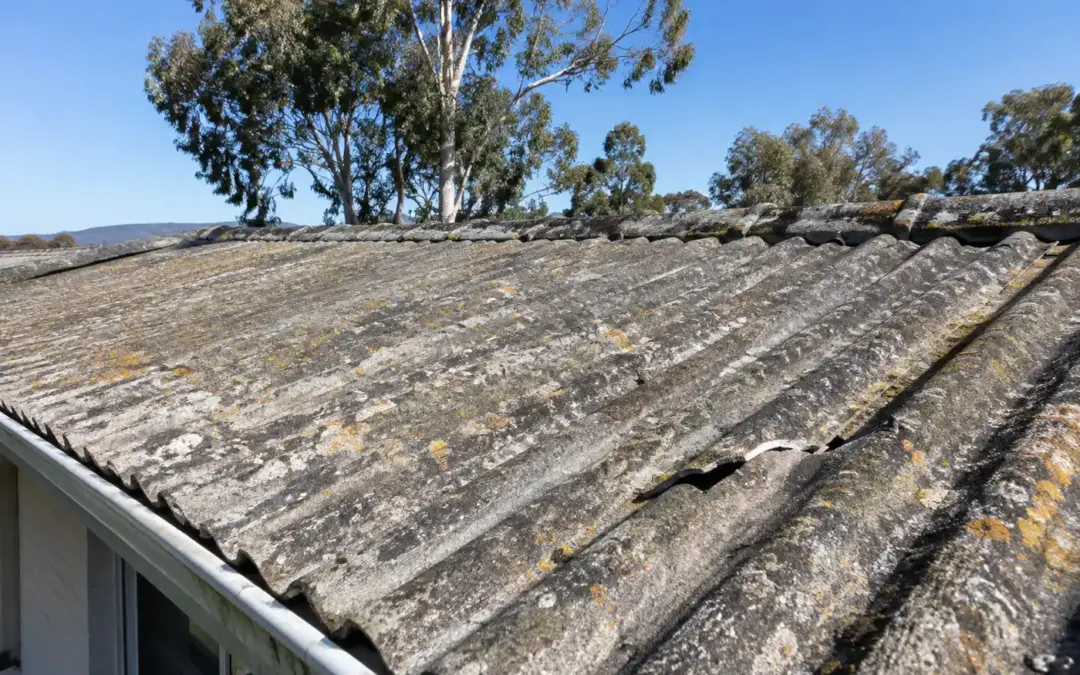
A call we get every few months goes something like this. Someone has bought an older place in Canberra, the corrugated roof looks grey and tired, and they want it cleaned and painted so it looks like the house next door. Then we get up close and the sheets are not steel at all. They are asbestos cement, and that changes the whole conversation.
If you think you have an asbestos roof in Canberra, this guide covers how to tell, what you can and cannot do to it, and what your real options are. We will be straight with you: the answer is rarely a restoration.
Plenty of older Canberra homes still have one
Asbestos cement sheeting was a popular roofing material in Australia for decades. It was cheap, light and did not rust. Corrugated profiles (Super 6 is the name most people know) went onto houses, garages, carports and sheds right up until the mid 1980s, and asbestos was banned completely in Australia from 31 December 2003.
National guidance says any home built or renovated before 1990 may contain asbestos somewhere. In Canberra that takes in a big share of the older suburbs. The roof sheets are only one place it hides. We also see it in:
- flat eaves linings under the gutter line (often called fibro)
- gable end panels and barge cappings
- old flue pipes, vent pipes and exhaust ventilators
- outbuildings, which tend to get forgotten
One Canberra point worth clearing up: Mr Fluffy was loose fill asbestos insulation pumped into ceiling spaces. That is a separate problem with its own history. Asbestos cement roof sheeting is bonded material, a different product with different rules, and it is far more common.
You cannot confirm it by looking, but the clues are strong
Nobody can tell you for certain that a roof is asbestos just from the ground. Not us, not a building inspector. The only way to know is to have a sample tested by an accredited laboratory, and the sample should be taken by someone trained to do it safely.
That said, the clues are fairly reliable. Asbestos cement corrugated sheets have wider, rounder corrugations than modern steel roofing. They are thick, flat grey or faded paint, and often rough on the surface where the cement has weathered. Lichen and moss love them. Tap a steel sheet and it rings. Asbestos cement gives a dull knock. If the house is older and the roof has never been replaced, assume it is asbestos until a test says otherwise.
Please do not climb up there to check. Asbestos cement sheets are brittle and will not take a person’s weight between the purlins (the timber or steel battens underneath). Falls through these roofs are a well known cause of serious injury, separate from any fibre risk.
Why we will not clean or restore an asbestos roof
A normal restoration starts with a high pressure clean, then repairs, then a coating. On an asbestos cement roof, the first step alone is the problem.
Work health and safety rules prohibit using high pressure water on asbestos cement. The water strips away the weathered surface and blasts fibres into the air, into your gutters, down the downpipes and across your garden and the neighbours’ yards. Cleaning that up afterwards is a contamination job, not a tidy up. The same goes for wire brushing, sanding, cutting or grinding the sheets.
We cover the right way to clean a sound roof in our post on what actually works for roof cleaning, but none of that applies here. An asbestos roof is a different category of job.
Left alone, it is usually not an emergency
This is the bit that surprises people. Bonded asbestos in good condition, undamaged and undisturbed, is generally considered low risk. Government asbestos advice across Australia says the same thing: if it is intact, the safest short term option is often to leave it alone.
The trouble is that roofs do not stay in good condition forever. Decades of Canberra frosts, hot summers and hail all work on the cement. These are the signs it is breaking down:
- cracked or broken sheets, especially after a hailstorm
- crumbling edges and corners
- heavy weathering where the surface looks rough or powdery
- a buildup of grey sludge in the gutters below
- leaks you cannot trace to flashings or fixings
If you are seeing any of these, the roof is moving from “leave it” to “plan for it”. A damaged sheet is not something to patch with silicone and forget.
You have three real options
1. Leave it and keep an eye on it
If the roof is intact and not leaking, this is a legitimate choice for now. Keep a record that the roof is likely asbestos, tell any tradesperson before they go up, and do not let anyone pressure clean it or mount anything on it without proper controls.
2. Seal it in place
Some owners have the sheets coated with a sealant made for asbestos cement, applied without pressure washing or abrasion first. It can lock down the surface and improve the look. But it is a holding measure, not a fix. The asbestos is still there, the sheets keep ageing underneath, and it will still need to come off one day.
3. Remove it and put a new roof on
This is the option most owners end up choosing, and it is the one we recommend once the roof is showing its age. In the ACT, removing asbestos from a home has to be done by a licensed asbestos removalist. They seal off the area, wet the sheets down, take them off whole rather than breaking them, wrap them and send them to an approved disposal site. Check the current requirements with WorkSafe ACT before anyone starts.
Once the old sheets are gone and the site is cleared, the new roof goes on like any other job. This is where we come in. Most asbestos roofs we replace are swapped for Colorbond steel, because it suits the existing light roof frame. Our roof replacement service covers the new battens, sarking, flashings, ridges and gutters, and the work is backed by our 15 year warranty.
If you are weighing up what to put back, our Colorbond or tile comparison walks through the trade offs for Canberra conditions. With asbestos replacements, though, the frame was usually built for a light sheet roof, so heavy tiles are rarely a simple swap.
Two jobs, two parts of the bill
We are not going to quote a number here, because every asbestos job varies and an honest figure needs someone to look at the roof. What we can tell you is what drives it. There are two separate parts: the licensed removal and disposal, then the new roof. Size and pitch matter for both. Access matters a lot, because a single storey house with a clear driveway is very different from a steep block with no truck access. Fibro eaves, gable panels and outbuildings add to the removal scope if you deal with them at the same time.
Our guide to what drives roof replacement cost in Canberra covers the new roof side in more detail.
If you think your roof might be asbestos cement, book a free inspection before you spend money on cleaning or painting quotes. We will tell you what we see, whether it needs testing, and whether a full roof replacement makes sense now or can wait.
Common questions about asbestos roofs
Is an asbestos roof dangerous?
An asbestos cement roof in good condition, left undisturbed, is generally considered low risk. The danger comes when it is damaged, badly weathered, or disturbed by drilling, cutting, breaking or pressure cleaning, because that is what releases fibres. Treat it with care and plan for its eventual removal.
Can you cover an asbestos roof?
Building a new roof over the top leaves the asbestos in place and still means fixing through or near the old sheets, which is a disturbance in itself. Coating it with a suitable sealer is possible as a short term measure. For most Canberra homes, removal by a licensed removalist followed by a new roof is the cleaner long term answer.
How do I know if my roof is asbestos?
Age is the first clue: homes built or renovated before 1990 may contain it. Wide, rounded grey corrugations and a weathered cement surface are strong signs. The only certain answer is a laboratory test of a sample taken safely by someone trained to do it.
Can I remove an asbestos roof myself in Canberra?
No. In the ACT, asbestos removal from a home must be carried out by a licensed asbestos removalist. Check with WorkSafe ACT for the current rules before any work starts.
Can you paint an asbestos roof?
It can be coated with a product made for asbestos cement, but only without pressure washing, sanding or wire brushing first. A normal roof painting job, which starts with a high pressure clean, is not allowed on asbestos cement.
What is the best replacement for an asbestos roof?
Colorbond steel is the usual choice. It is light, so it suits roof frames that were built for sheeting, and it copes well with Canberra frosts and hail. Tiles are much heavier and the frame often needs work before they can go on.