
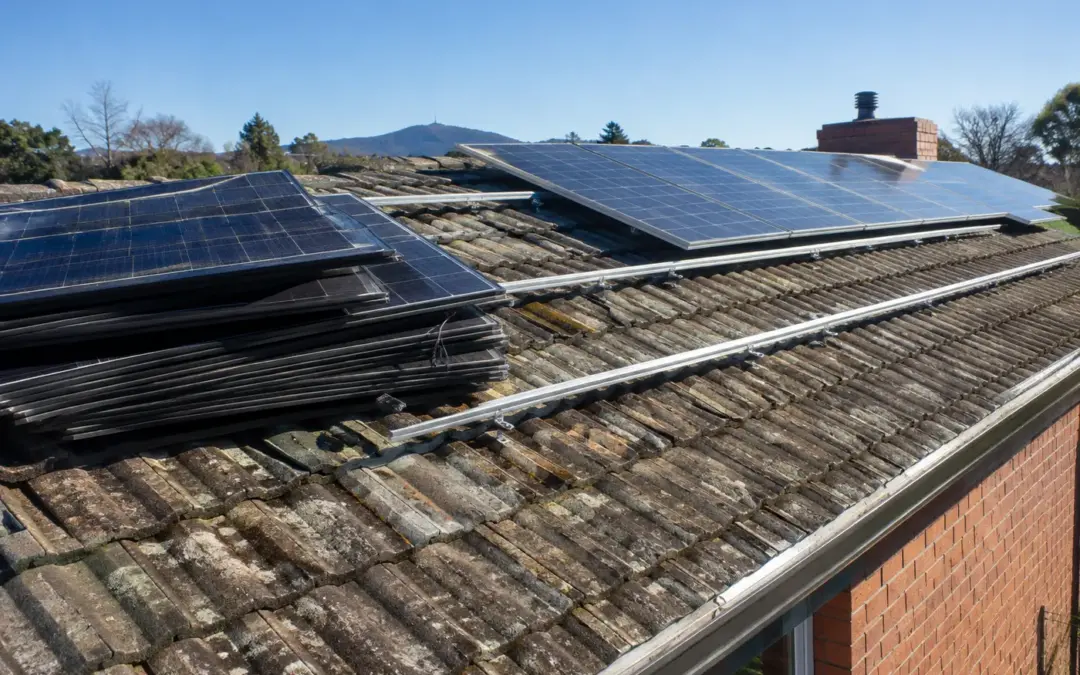
Here is a call we get more and more. The roof is looking tired, the ridge pointing is cracking, and the homeowner wants it restored. Then comes the pause: “But we’ve got solar panels on the north side. Does that change things?” It does. Roof restoration with solar panels is very doable, but it takes a bit more planning than a bare roof, and the order you do things in matters.
This guide walks through what we look at, when the panels need to come off, who handles which part, and the questions worth asking before you sign a quote.
The panels usually sit on the part of the roof that needs the most work
Solar goes on the north and west faces because that is where the sun is. Those same faces cop the most UV, so they are often where the coating has faded hardest and the tiles have gone chalky. On a lot of Canberra homes, the best roof surface for solar is also the most worn one.
Under the panels it is a different story again. The tiles there are shaded, damp for longer after rain and frost, and hard to see. When panels come off we often find:
- Cracked or slipped tiles, usually from installers walking the roof or from brackets pushing tiles up
- Leaves, dirt and lichen packed in behind the rails
- Bird nests, and the mess that comes with them
- Cable entry points where the seal has dried out and started letting water in
None of that is a reason to regret getting solar. It is just why we don’t like quoting a full restoration on a solar roof without getting up there first.
Do the panels have to come off? Usually, for a proper job
A full tile roof restoration means cleaning, replacing broken tiles, rebedding and repointing the ridge capping, then applying primer and coating. You cannot pressure clean, repoint or coat what you cannot reach. If the panels stay put, the tiles under them get none of that work.
So there are really two honest options.
Option one: remove the panels and restore the whole roof
This is the thorough way. The system is safely shut down and the panels and rails come off, then the whole roof gets restored as one job, and the system goes back on afterwards. Every tile gets looked at, and the roof under the array is in the same condition as the rest when the panels return. If you are spending the money on a restoration, this is the version we would choose for our own house.
Option two: restore around the array
Sometimes the panels stay on and the work is done around them. That can make sense when the array is small, the roof under it is sound, and the main problems are elsewhere, such as ridge pointing or a leaking valley. The trade off is plain: the area under the panels is not cleaned or coated, and you will see a colour difference if the panels ever come off. It suits a targeted repair better than a full restoration.
If you are unsure which camp your roof falls into, our roof restoration service in Canberra starts with an inspection, and part of that is checking what is happening under and around the panels.
Three trades, one sequence
This is where people get caught out. Solar panels are part of an electrical system, so a roofer should not be disconnecting them. Isolating, removing and reinstalling the system is a job for a licensed electrician or an accredited solar installer. The roofer handles everything to do with the roof itself.
A typical sequence looks like this:
- Inspection, so everyone knows the condition of the roof and the array before anything moves
- The solar installer isolates the system, removes the panels and rails, and stores them safely
- The roof is restored: cleaning, tile replacement, ridge work, coating
- The coating is given time to cure properly
- The installer refits the rails and panels, reseals the roof penetrations and tests the system
Step four gets skipped more often than it should. Putting rail brackets back onto a coating that has not cured can mark or lift it, and that undoes some of what you just paid for.
Get the paperwork sorted before the panels come down
A few things are much easier to settle up front than to argue about later:
- Is panel removal and refitting in the quote, or is it a separate bill from the solar company?
- Who is responsible if a panel is damaged while it is off the roof?
- Will refitting affect the warranty on your panels or inverter? Check your system paperwork or ask the original installer.
- Where will the panels be stored during the job?
- Do you want bird proofing mesh fitted while the array is off anyway?
That last one is worth thinking about. If pigeons have been nesting under your panels, the cheapest time to stop them is while everything is already apart.
Timing it around a Canberra year
While the panels are off, your system is not generating. That pushes some people toward doing the work in winter, when output is lower anyway. The catch is that roof coatings need dry conditions and reasonable temperatures to cure, and a Canberra winter brings frosty mornings, damp roofs that are slow to dry, and short days. In our experience autumn and spring are the sweet spot. You lose less generation than in summer, and the weather is kinder to the coating.
Whatever the season, allow for weather delays. If rain stops work partway through, the panels stay down longer, and it helps if everyone (you, the roofer and the solar installer) knows that might happen.
Planning to add solar? Fix the roof first
If you have not installed solar yet and your roof is getting on, this is the cheapest moment to sort it out. Restoring or repairing a roof before the panels go on means you never pay to have the panels taken off and put back.
It is also worth asking whether the roof has enough life left to carry a solar system for the long haul. If the tiles are badly worn or the battens are failing, it may be smarter to look at whether restoring or replacing makes more sense before anything gets bolted to it.
Metal roofs need a different checklist
On Colorbond and other metal roofs, the panels are usually fixed with brackets screwed through the sheeting or clamped to it. When we restore a metal roof with solar, we pay close attention to those fixing points. Old sealant around screws dries and cracks, and any spot where water sits around a fixing can start to rust. Swarf, the tiny metal shavings left from drilling, can also rust stains into the surface if it was never swept off after the original install. Getting the panels off gives you a rare chance to fix all of this properly.
Don’t ignore a leak just because the panels are in the way
If you have a water stain on the ceiling under the array, it is tempting to put it off because getting to the roof is awkward. Please don’t. Leaks around solar installs often come from a tile cracked during installation or a cable penetration that was never sealed well. Both are small fixes early on. Left alone, water can soak the battens and ceiling for months before anyone notices. We cover how a cracked roof tile turns into a bigger problem in a separate guide.
Getting a solar roof restored properly
Start with an inspection so you know what is under those panels before you commit to anything. We offer a free inspection, and we back our work with an industry leading 15 year warranty. If your roof has solar and is starting to show its age, book a roof restoration inspection and we will talk you through whether the panels need to come off and how to sequence the job with your solar installer.
Common questions about restoring a roof with solar panels
Do solar panels have to be removed for a roof restoration?
For a full restoration, usually yes. The tiles under the array cannot be cleaned, repaired or coated with the panels in place. If the work is a targeted repair somewhere else on the roof, the panels can often stay where they are.
Who removes the solar panels, the roofer or an electrician?
The system should be isolated, removed and reinstalled by a licensed electrician or accredited solar installer. The roofer looks after the roof itself. The two trades need to agree on timing so the panels are not off longer than necessary.
Should I restore my roof before installing solar panels?
If the roof is already showing wear, yes. Doing it first means you avoid paying to remove and refit the panels later. It is also a good time to check the roof has enough life left to carry the system.
Can solar panel installation damage roof tiles?
It can. Walking on tiles, especially older concrete or terracotta ones, can crack them, and brackets can lift tiles if they are not fitted carefully. Those cracks often go unnoticed until a leak shows up inside.
Can you paint a roof around solar panels?
You can coat the exposed areas, but the tiles under the panels stay untreated. That leaves a mismatch you will see if the panels ever come off, and any damage under the array goes unfixed.
Will removing my panels affect the solar warranty?
That depends on your panel and inverter warranty terms and on who does the work. Check your system paperwork or ask your original installer before the panels come down, and keep a record of who removed and refitted them.