
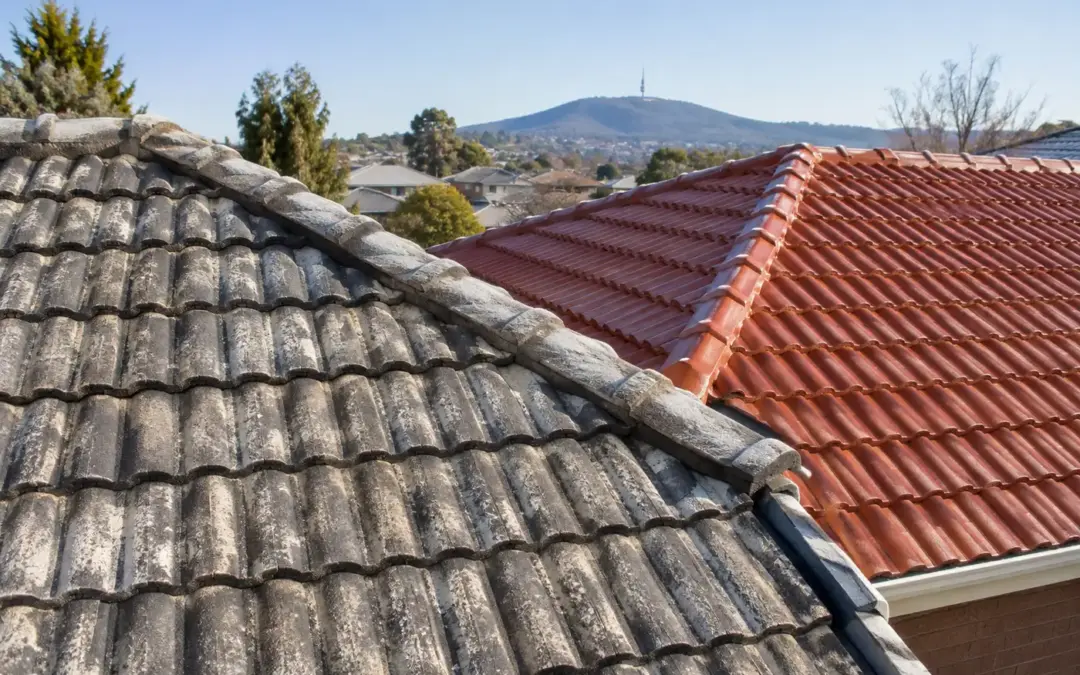
We get a version of this call fairly often. A neighbour’s roof has just been restored and looks brand new, and the caller wants the same result. Then comes the question most people don’t think to ask: “Is mine even the same kind of tile?” Quite often it isn’t. One roof is concrete, the other is terracotta, and the two jobs look nothing alike.
That is the real heart of the terracotta vs concrete roof tiles question in Canberra. Most people asking it aren’t picking tiles for a new build. They already live under one or the other, and they want to know what they’ve got, how it ages and what it will need. That’s what this guide covers, with a short section at the end if you are choosing for a new roof.
Two tiles that look alike from the street but age very differently
Concrete tiles are made from cement, sand and water, pressed into shape, with the colour mostly carried in the surface. Terracotta tiles are natural clay, shaped and fired in a kiln, a bit like a flowerpot. Some are left plain and some get a glazed finish fused on during firing.
From the footpath, a red concrete tile and a red terracotta tile can look almost the same. Up close, after a few decades of Canberra weather, they tell very different stories.
Concrete tiles wear from the surface down
On a concrete roof, the coloured surface slowly erodes. Sun, frost and rain strip it back until the body of the tile is exposed: grey, rough and a little sandy to the touch. Once that happens the tile soaks up more water. Lichen and moss love it.
This is the roof we see most often with that tired, patchy, faded look. The good news is that concrete takes a coating well. A typical restoration on a concrete roof involves a thorough clean to lift the lichen and loose surface, replacing cracked tiles, fixing the ridge capping, then sealing the porous surface and finishing with a roof membrane paint.
Done properly, the coating takes over the job the original surface used to do. That is why a restored concrete roof can pass for a new one. If you’re weighing up the paint side of things, our post on whether roof painting pays off in Canberra goes into more detail.
Terracotta keeps its colour but can crack and flake
Terracotta is a different animal. The colour runs right through the clay, so unglazed terracotta doesn’t fade the way concrete does, and glazed tiles hold their shine for a very long time. A grubby terracotta roof often comes up close to new with nothing more than a careful clean.
The weak point is that fired clay is brittle. Terracotta cracks more readily than concrete under a heavy foot, a dropped branch or a hard hailstorm. Older or more porous tiles can also suffer in a Canberra winter. Water soaks into the clay, freezes overnight, expands and slowly flakes the face off the tile. That’s called spalling, and it shows up as small chips or thin layers peeling away from the tile surface.
Because of that, restoring a terracotta roof is mostly about repairs rather than coatings. We swap out cracked and flaking tiles, clean the roof and put most of our effort into the ridges. The tiles themselves are rarely the first thing to fail. The mortar holding the ridge caps in place usually is. Our guide to spotting ridge capping that needs repointing shows what to look for from the ground.
One thing that surprises people: glazed terracotta generally shouldn’t be painted. Paint struggles to grip that slick fired surface and can start peeling. Unglazed terracotta can be coated if you want a colour change, but plenty of owners prefer the natural clay look, and we don’t push it.
Five ways to tell which tile is on your roof
You don’t need to climb up to find out, and please don’t. Both tiles can crack underfoot, and a tiled roof is a hard place to keep your balance. Most of the time you can tell from a spare tile in the shed or garage, or a broken piece in the garden bed.
- A broken edge. Concrete is grey inside with a thin coloured skin. Terracotta is the same orange, red or brown all the way through.
- The underside. Grey and gritty usually means concrete. If it looks like the bottom of a clay pot, it’s terracotta.
- Weight and thickness. Concrete tiles are chunkier and noticeably heavier.
- A gentle tap. Terracotta rings. Concrete thuds.
- Grey patches on the roof. If you can see grey showing through faded colour from the ground, it’s almost certainly concrete.
Still not sure? We’ll tell you during a free roof inspection. It’s one of the first things we note, because it shapes the whole job.
What each tile type needs over its life
Here is the practical difference side by side.
Cleaning. Worn concrete holds lichen and moss far more readily because its surface is porous. Terracotta, especially glazed, sheds dirt more easily. Both need a careful hand with the pressure cleaner, since too much force damages old concrete and can crack old clay.
Colour. Concrete fades and will eventually need a coating to look good and shed water properly. Terracotta holds its colour on its own.
Breakages. Terracotta cracks more easily from impact. Concrete handles a knock better but gets softer and more porous as its surface wears.
Replacement tiles. This is the one that catches people out. Many older profiles of both types are no longer made. On a concrete roof a perfect match matters less, because the restoration coating evens out the colour. On a terracotta roof the new tile has to match in shape and colour, so salvaged tiles from the same range are often the answer.
Ridges, valleys and flashings. No difference. Both tile types rely on the same ridge capping, bedding and flashing, and those parts need the same attention whichever tile you have.
On an existing roof, condition matters more than material
If you already have tiles, the useful question isn’t which type is better. It’s whether yours are still sound. A concrete roof with a worn surface but few cracks is a good candidate for restoration. A terracotta roof with good tiles and tired ridges usually needs repairs and repointing, not paint. Either roof can reach the point where so many tiles are cracked, flaking or porous that restoring them stops making sense. That call gets made on the roof, tile by tile.
We’re tile and metal roofing specialists, and our roof repair and restoration services cover both tile types: cleaning, tile replacement, repointing, coating, and the flashings and gutters around them.
Choosing for a new roof is a simpler trade-off
For a new build or a full re-roof, concrete costs less to buy and is quicker to lay, but expect to recoat it down the track. Terracotta costs more upfront, keeps its colour with little help and suits older Canberra homes where the original roof was clay. Both are heavy, so the roof frame has to be designed to carry tiles. If it wasn’t, metal is usually the better path.
For most Canberra homeowners, though, that decision was made by whoever built the house. What you control is how well the roof is looked after from here.
Common questions about terracotta and concrete roof tiles
Which is better for a roof, concrete or clay tile?
Neither wins outright. Clay (terracotta) holds its colour and doesn’t need coating, but it is more brittle and costs more. Concrete is cheaper and tougher against impact, but its surface wears and it will eventually need sealing and painting to stay watertight and looking good.
What are the downsides of using concrete roof tiles?
The big one is surface wear. As the coloured face erodes, the tile turns porous, fades and grows lichen. Concrete tiles are also heavy, which matters if you ever change roofing material.
What is the lifespan of a terracotta tile roof?
The clay tiles themselves are very long lasting and are rarely the first part to fail. Ridge mortar, bedding and flashings usually need work well before the tiles do. Widespread cracking or frost flaking is the sign a terracotta roof is nearing the end of its life.
How can I tell if my roof tiles are concrete or terracotta?
Find a spare or broken tile and look at the edge. Grey inside with a coloured skin means concrete. Colour all the way through means terracotta.
Can you paint terracotta roof tiles?
Unglazed terracotta can be coated if it is cleaned and primed properly first. Glazed terracotta generally shouldn’t be painted, because the coating struggles to bond to the glazed surface.
Are terracotta tiles more expensive than concrete?
New terracotta tiles generally cost more to buy and lay than concrete. On an existing roof, the cost of restoration depends far more on condition, size and access than on tile type, which is why we quote after an inspection.
Not sure which tiles you’ve got, or what they need next? Book a free inspection and we’ll tell you exactly what’s on your roof and what is worth doing, and ask us about our industry leading 15 year warranty while we’re there. Everything we offer is on our Canberra roofing services page.