
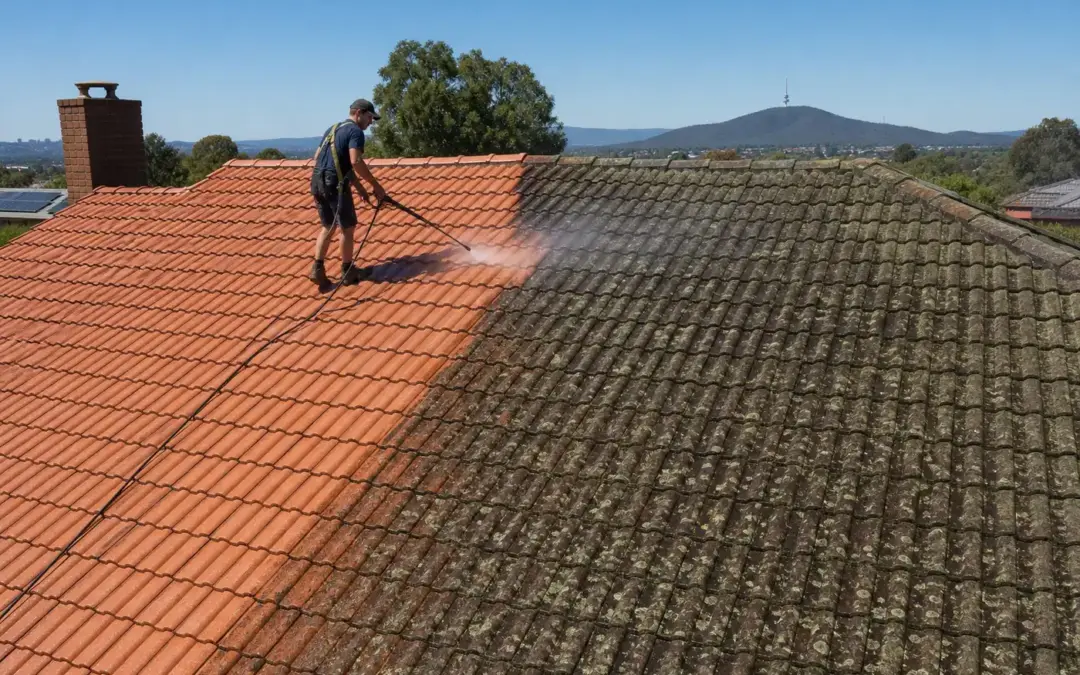
You’ve probably spotted it from the driveway, or from a neighbour’s upstairs window. The southern side of the roof has gone dark green, maybe blotched with grey-white lichen, while the sunny side still looks close to its old colour. That split down the middle is one of the most common things we see, and it is usually what prompts people to look into roof cleaning in the first place. Canberra roofs cop a lot from the weather, and the tiles show it.
Cold, damp winters, heavy morning frost and long hours of shade on south-facing pitches give moss, lichen and black algae exactly what they need to settle in. On tile and terracotta it takes hold fastest, because those surfaces hold a little moisture and give the growth something to grip. Left alone for a few winters, it spreads. We look at a lot of roofs where one good clean is the difference between tidy and tired.
What that green and grey stuff actually is
People lump it all together, but there are three different things growing up there and they behave differently. Moss is the soft, spongy green carpet that builds up in the gaps between tiles and along the low edges where water sits longest. Lichen is the crusty grey or pale-green patchwork that bonds hard to the surface, and it is the stubborn one. Black algae is the flat dark staining that streaks down a roof and looks like dirt that will not wash off.
All three love the same conditions: shade, moisture and a surface that stays cool. That is why the south side goes first and worst around here.
Why it is more than a cosmetic problem
The look bothers people, fair enough. But the real issue is what the growth does over time. Moss holds water against the tile instead of letting it run off and dry. On an older tile that has lost its protective glaze, that constant damp speeds up the wear and can let water creep in where it shouldn’t. Lichen roots into tiny surface pits and keeps working away at them.
There is a knock-on effect at gutter level too. Every time it rains, bits of moss and grit wash down off the roof and collect in the gutters and downpipes. So a mossy roof and a blocked gutter usually turn up together. If you want the full picture on that side of things, our guide on how often to clean gutters in Canberra walks through the timing.
Soft washing beats blasting it with pressure
This is the part that surprises people. A high-pressure blast feels like it should be the right tool, and it does strip the green off fast. The trouble is what it strips off with it. On tile, heavy pressure can lift the surface coating, chip edges and force water up under the overlaps. On older terracotta it can crack tiles outright. We have been called out plenty of times to fix leaks that started with a well-meaning pressure clean.
The safer approach for most roofs is a soft wash: a treatment that kills the moss, lichen and algae at the root, then a low-pressure rinse to clear it. The growth keeps dying back and lifting off for weeks afterwards, so the roof often looks better a month later than it did the day we finished. We handle tile, terracotta and metal, and the method changes with the surface. If you want the detail on what a proper clean involves, our roof and moss removal service page lays it out.
Cleaning is usually step one, not the whole job
A clean roof also tells you the truth about its condition. Once the moss is gone, cracked tiles, worn coating and tired ridge capping are easy to see, and they were hiding under the growth the whole time. That is why we treat cleaning as the first look, not the finish line.
For a lot of homes, a wash is all that is needed for a good while. For others, the clean is the sensible start before repointing, or before a fresh coat goes on. If your roof is heading toward a recoat anyway, it is worth reading our take on whether roof painting is worth it in Canberra before you decide. Any restoration work we do is backed by a 15 year warranty, so it is worth knowing where a clean sits in the bigger plan.
The best time of year to do it here
Spring and early autumn are the sweet spot in Canberra. You want a run of mild, dry days so the treatment can sit and work without rain washing it off too soon, and without frost or scorching heat getting in the way. We clean through summer too, but the shoulder seasons tend to be kinder to the job. Booking ahead of winter also means the roof heads into the wet months clear, which slows the moss coming back.
Should you get up there and do it yourself?
Honestly, for most people the answer is no, and it is a safety call more than a skill one. Canberra roofs are often steep, and a mossy tile is genuinely slippery. Add the cleaning chemicals, the height and the brittle older tiles that crack under a footstep, and it stops being a Saturday job. If you are set on doing something yourself, keep it to what you can reach from a stable ladder at the edge and leave the pitch to someone with the right gear and insurance.
Common questions about roof cleaning in Canberra
Is it worth cleaning your roof?
Usually yes, especially if moss or lichen has taken hold. A clean protects the tile surface, keeps water running off the way it should and stops debris clogging your gutters. It also lets you see the roof’s real condition before small problems turn into leaks.
How much does it cost to clean a roof?
It depends on the size and pitch of the roof, the surface, and how much growth is up there. A small tiled home is a very different job to a large steep roof thick with lichen. We give you a firm price after a free inspection, so you are not guessing from a rough online figure.
Can I pressure wash my roof myself?
We would steer you away from it. High pressure can strip the tile coating, crack older tiles and drive water up under the overlaps, which is how a lot of leaks start. A soft wash that treats the growth at the root is gentler and lasts longer, and it is safer done by someone set up for working at height.
What time of year is best to clean a roof?
Spring and early autumn work best in Canberra. You want mild, dry days so the treatment can do its job without rain washing it away, and cleaning before winter means the roof faces the wet season without a head start on the moss.
How long does roof cleaning take?
Most standard homes are a one-day job. With a soft wash the roof keeps clearing for a few weeks after we leave as the treated growth dies back and lifts, so the final result shows up gradually rather than all at once.
Will the moss come back?
It can, over time, since the conditions that grew it are still there. A proper treatment kills it at the root so it takes far longer to return than a quick surface scrub. Keeping gutters clear and booking the occasional clean keeps a roof on top of it.
Get a straight answer on your roof
If the green has crept across more of your roof than you’d like, the simplest next step is to have someone take a proper look. We inspect tile, terracotta and metal roofs across Canberra for free, tell you whether a clean is all it needs, and give you a firm price with no pressure. Book a roof cleaning inspection and we’ll let you know exactly what you’re dealing with.