
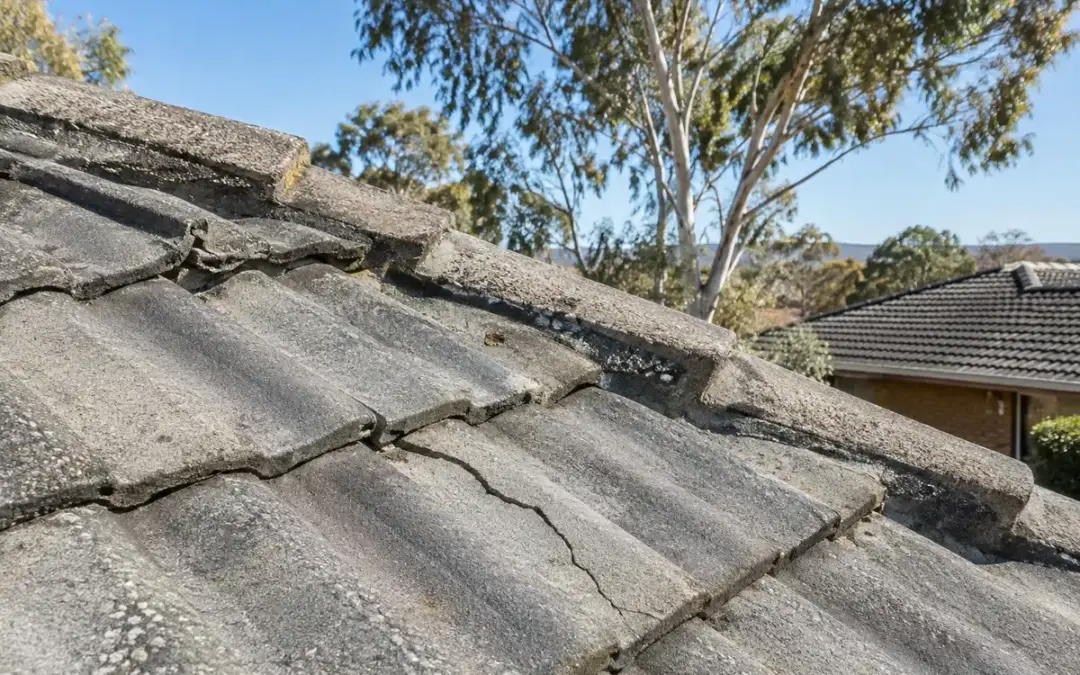
It usually starts with a glance. You’re up a ladder clearing leaves after a windy week, or the solar installer mentions on the way down that “one of your tiles has had it”. Now there’s a crack in your head as well as on your roof, and you want to know if it matters. In most cases cracked roof tiles repair is a small, quick job. The catch is that a crack you ignore for a couple of winters can turn into rotten battens and a stained ceiling, and that is not a small job at all.
A cracked tile rarely leaks on the first day
This surprises people. Tiles overlap, and on most homes built in the last few decades there’s a layer of sarking (a reflective foil membrane) under the battens to catch any water that gets past. So a hairline crack often lets a little water through in heavy rain, the sarking carries it down to the gutter, and nothing shows inside.
The catch is that water still lands on the timber battens every time it rains. Over a few seasons they soften, nails rust and the sarking can sag or tear. By the time a brown ring shows on the ceiling, the damage has been growing for a while.
Older Canberra homes are a different story. Plenty of the post-war houses we work on in suburbs like Ainslie, Narrabundah and Yarralumla were built without sarking at all. On those roofs, a cracked tile can drip straight onto the ceiling insulation from the first decent storm.
Why tiles crack here more than you’d expect
Canberra is hard on roofs in a way coastal cities aren’t. The usual culprits we find:
- Frost. Water soaks into older, porous tiles, freezes overnight, expands, then thaws in the morning sun. Repeat that through a Canberra winter and small cracks open up and spread.
- Hail. Anyone who was here for the January 2020 hailstorm knows what a bad one can do. Even smaller storms can chip or split tiles on the side of the roof facing the weather.
- Foot traffic. Antenna installers, solar crews, someone hanging Christmas lights. Tiles are strong where they overlap a batten and weak in the middle, and a boot in the wrong spot snaps them.
- Branches. Gums drop limbs without much warning, and even a light branch landing from height will crack a row.
- Age. Concrete tiles lose their surface coating over time, absorb more water and become brittle. Terracotta holds up better but isn’t immune.
Cracks around solar panels are one of the most common callouts we get. If you’ve had panels fitted in the last year and now have a leak, a stepped on tile under the frame is a likely suspect.
How to check without climbing onto the roof
Please don’t walk on the tiles to look. You’ll likely crack more of them, and a pitched tile roof is a genuinely dangerous place to be.
From the ground, a pair of binoculars on a sunny day shows a lot. Look for tiles sitting at an odd angle, lighter coloured lines across a tile (fresh cracks often show paler than the weathered surface), and any pieces sitting in the gutter or valley. A broken corner in the gutter is a giveaway.
Inside, take a torch into the roof space after rain. Damp patches or dark streaks on the battens and rafters, wet insulation, or pinpricks of daylight where you shouldn’t see any all point to a tile that’s letting water in.
What a proper repair actually involves
Replacing a single cracked tile is straightforward in principle. We lift the tiles that overlap it, slide the broken one out, check the batten and sarking underneath, then fit the new tile and settle the surrounding ones back into place. While we’re up there we look at the tiles nearby, because one crack often has a neighbour you can’t see from the ground.
The fiddly part is matching. Many of the concrete tile profiles on Canberra roofs from the 1970s and 80s aren’t made any more, and a brand new tile in a faded roof stands out. Where we can’t find a match, we’ll often take a sound tile from a spot nobody looks at, like the back of a garage roof, use it on the visible face, and put the closest available match where it won’t be noticed.
You’ll see advice online about filling cracks with silicone or roofing sealant. That can buy a few weeks before a storm, but sealant doesn’t bond well to dusty, weathered tiles, it breaks down in the sun, and it makes the tile harder to remove later. We treat it as a temporary patch only. If you want the job done once, our tile and metal roof repair service covers broken tile replacement along with the checks underneath.
When a few cracks are really a warning
One or two cracked tiles after a storm or a tradie visit is a repair. A scatter of cracks across every face of the roof is something else. It usually means the tiles themselves have become porous and brittle, and replacing them one at a time will feel like chasing your tail.
Other signs that point the same way: crumbling mortar under the ridge capping, moss and lichen across large areas, tiles that flake or powder when touched, and leaks turning up in more than one room. At that point it’s worth comparing a full restoration against ongoing repairs. The type of tile matters a lot here, and our guide to how terracotta and concrete tiles age differently explains why a concrete roof and a terracotta roof of the same age can be in very different shape.
How long can you safely leave it?
A single hairline crack on a sarked roof is not an emergency. It does need fixing before winter, though, because frost will widen it, and ideally before the summer storm season.
Act quickly if any of these apply: water is already coming inside, the crack is in or near a valley where water concentrates, the roof has no sarking, or a section of tile is missing outright. Missing pieces let wind get under the surrounding tiles, and that’s how one broken tile becomes a dozen in the next gale. If the damage came from hail or a fallen branch, our notes on what to do after storm damage to your roof cover photos, temporary protection and insurance.
What changes the price of a tile repair
We won’t quote a figure sight unseen, because a cracked tile job can be anything from a short visit to a half day of work. The things that move the price:
- how many tiles are broken, and whether they’re grouped or spread around
- roof height and pitch, since a steep two storey roof needs more safety setup
- whether matching tiles are available or need to be salvaged
- what’s underneath: soft battens or torn sarking add work
- access around solar panels, skylights or air conditioning units
We offer free inspections, so you’ll know what’s broken and what it will take before you commit to anything.
If you’ve spotted a cracked tile or a new damp patch on the ceiling, book a free roof inspection and we’ll find the cause and fix it properly. Tile and metal roofs are what we do, right across Canberra.
Common questions about cracked roof tiles
How do you fix a broken roof tile?
The overlapping tiles are lifted, the broken tile is slid out, and a matching tile goes in its place. A good roofer also checks the batten and sarking underneath for water damage and looks at the surrounding tiles. Patching a crack with sealant is only a short term measure.
Can you replace just one roof tile?
Yes. Single tile replacement is one of the most common roof repairs we do. The main challenge is finding a tile that matches an older or discontinued profile, which sometimes means swapping in a salvaged tile from a less visible part of the roof.
How long can you leave a leaking roof?
Not long. Once water is getting inside, every rain soaks insulation, plasterboard and timber, and mould can follow. Get a temporary cover on it and book a repair as soon as you can, especially heading into winter.
What is the average lifespan of a concrete tile roof?
The concrete tiles themselves can last a very long time. What wears out first is the surface coating, which lets the tiles absorb water and become brittle, and the mortar under the ridge capping. Restoring the coating and ridges is often what keeps an older concrete roof going.
Can I seal a cracked roof tile instead of replacing it?
You can, as a stopgap before rain. Sealant struggles to stick to weathered tiles and breaks down in UV, so expect it to fail eventually. Replacement is the permanent fix and usually isn’t much more work.
Does home insurance cover cracked roof tiles?
It depends on the cause and your policy. Damage from a specific event like hail or a fallen branch is often covered, while cracking from age and general wear usually isn’t. Take photos as soon as you notice the damage and check your policy wording before lodging a claim.