
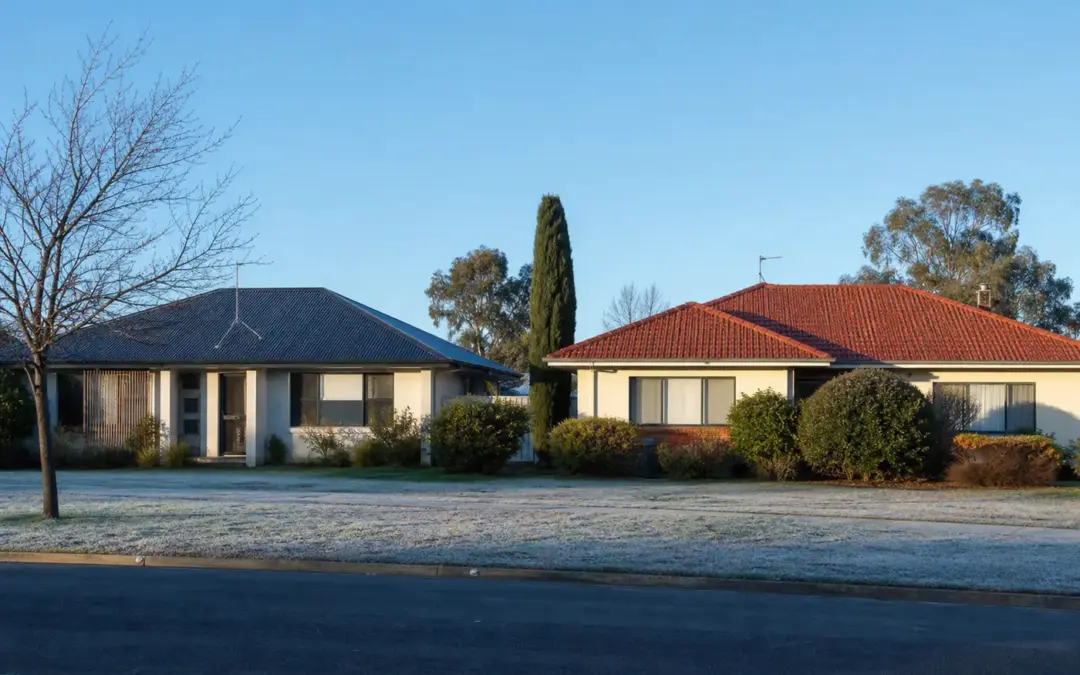
You are standing in the driveway, looking up at a roof that has seen better days, and the question lands: do we stick with tiles or switch to Colorbond? It comes up a lot when we quote here. Sometimes it is a tired 30-year-old tile roof, sometimes it is a new build where the owner gets to choose from scratch. Either way, the colorbond vs tile roof decision in Canberra is worth getting right, because you live with it for decades and it is not a cheap thing to change your mind on later.
We fit and repair both. We are not here to talk you out of one or into the other. So here is how the two actually compare on the things that matter in this climate, from someone who is up on Canberra roofs most weeks of the year.
What each roof actually is
Colorbond is coated steel, rolled into long sheets with the ribbed profile you see on most newer homes. It goes on in big pieces, so a lot of roof gets covered quickly. Tiles are individual pieces, either concrete or terracotta, laid in overlapping rows and held down by their own weight plus clips at the edges. The ridges are bedded and pointed with a mortar and a flexible compound.
That basic difference, one continuous skin versus hundreds of separate pieces, is behind almost everything else on this list.
Canberra weather is the real test
We get a bit of everything here. Hard frosts through winter, genuinely hot dry summers, and the odd savage hailstorm that arrives with no manners at all. Each roof handles that differently.
Frost is the quiet one. Water gets into tiny cracks in old tiles or into worn pointing, freezes overnight, expands, and slowly opens the gap wider. Do that a few hundred times over a few winters and a hairline crack becomes a leak. Colorbond does not soak up water, so freeze-thaw does not chew at it the same way.
Hail is the loud one. A big hailstorm can crack or chip tiles, and it can dent Colorbond. Dented steel usually still keeps the water out and is mostly a looks issue. A cracked tile is a leak waiting for the next downpour. Neither roof is hail-proof, but they fail in different ways, and that is worth knowing before you choose.
Summer heat matters too. A pale or reflective Colorbond colour bounces a fair bit of heat off before it gets into the roof space. Tiles hold heat and let it go slowly, which some people actually prefer in a Canberra winter. Insulation under the roof does more than the roof material either way, so do not pick one purely on this.
Where the money really goes
People expect one to be flatly cheaper. It is not that tidy.
A Colorbond roof usually goes on faster because it covers ground quickly, and less labour on the day tends to keep the install cost down. Tiles take longer to lay and the roof frame has to carry a lot more weight, so on a new build the structure is built heavier to suit. If you are switching an old tile roof over to Colorbond, that lighter weight is often a plus on an older frame.
The part people miss is the long game. A tile roof is cheaper to keep going in one sense, because you can replace a handful of broken tiles cheaply. But tiles need their ridge capping re-bedded and re-pointed every so often, and the surface coating wears, which is where a roof restoration brings a tile roof back rather than replacing it. Colorbond needs very little in the middle years, though when a sheet does need doing it is a bigger single job than swapping a few tiles.
Rather than chase a dollar figure off the internet, get someone up on your actual roof. The pitch, access, and the state of what is already there move the price more than the material does.
How long you get out of each
Both last a long time if they are looked after. A well-laid tile roof can go on for decades, and the tiles themselves often outlast the bedding and pointing that hold the ridges. That is why tile roofs need attention along the way rather than one big replacement. A Colorbond roof also runs for decades, and the coating is what determines how it ages, so colour choice and the quality of the steel matter.
We back our work with an industry leading 15 year warranty, which tells you how much life we expect to add when we restore or re-roof either type. The honest headline is this: the roof that lasts is the one that gets maintained, whichever material sits on top.
The things people forget until later
Noise is a real one. Rain on Colorbond has a sound to it. Plenty of people love it, some do not, and modern insulation and sarking take a lot of the drum out of it. Tiles are naturally quieter under rain.
Looks matter more than people admit. A terracotta or concrete tile roof suits a lot of the older brick homes around the inner suburbs, and some estates have design rules about it. Colorbond gives you clean modern lines and a big colour range. On a heritage-style home, tiles often just look right.
Repairs differ day to day. A cracked tile after a storm is a quick, cheap fix. A leak in a Colorbond roof usually traces back to a flashing, a screw, or a join rather than the sheet itself, so it is a different kind of hunt.
You might not need to replace anything
Here is the thing we tell people before they spend on a whole new roof. A tired-looking roof is not always a worn-out roof. Faded colour, some moss, a few slipped tiles, and crumbling pointing all look grim from the driveway but are often surface problems, not structural ones. In a lot of cases the roof you have got is fine and just needs bringing back.
So before you weigh up materials, it is worth being clear on whether to restore or replace in the first place. If the answer really is replace, then the colorbond vs tile question is the next one to settle. If it is restore, the material choice is already made for you, and you have saved a good chunk of money.
So which one should you pick?
If you are on an older home and want to keep the traditional look, or you want the quietest roof under rain, tiles make sense, provided you are happy to keep up with re-pointing over the years. If you want a lighter roof, a fast install, a modern look, or you are replacing a heavy old tile roof on a frame that would rather not carry the load, Colorbond is a strong pick.
For most Canberra homes there is no wrong answer, only the one that suits your house, your budget, and how long you plan to stay. If you are leaning towards a change, our team handles full roof replacements in both materials and will give you a straight read on what your roof actually needs.
Common questions about Colorbond and tile roofs
Are tiled roofs cheaper than Colorbond?
Not always. Colorbond often works out cheaper to install because it goes on faster and weighs far less, which can save on the frame in a new build. Tiles can be cheaper to patch one at a time, but they cost more to maintain over the years once you count re-bedding and re-pointing. The real number depends on your roof, not the material alone.
Is a tile roof better than a metal roof?
Neither is simply better. Tiles are quieter under rain and suit traditional homes, while Colorbond is lighter, installs quickly and handles frost and freeze-thaw well. The better roof is the one that fits your house style, your climate and how much upkeep you want to do.
What are the downsides of a Colorbond roof?
It can dent in a serious hailstorm, though dents are usually cosmetic and still keep water out. Rain is louder without good insulation underneath. And when a sheet does need replacing, it is a larger single job than swapping a couple of tiles.
What are the downsides of having a tile roof?
Tiles are heavy, so the frame has to carry the load. Individual tiles crack, and Canberra’s frosts work at any cracks or worn pointing over time. The ridge capping needs re-bedding and re-pointing periodically, which is an ongoing maintenance cost.
How many years will a tile roof last?
A well-laid tile roof can last for decades, and the tiles themselves often outlast the mortar bedding and pointing that hold the ridges in place. That is why a tile roof needs upkeep along the way rather than one big replacement. Kept maintained, it can serve a home for a very long time.
What is the best roof for your money in Canberra?
Often it is the roof you already have, restored rather than replaced, if it is structurally sound. If you are genuinely replacing, Colorbond tends to give strong value on install and low maintenance, while tiles hold their value on traditional homes. Get someone up on the roof before deciding, because the condition underneath drives the cost.
Talk it through before you spend
If you are weighing up a new roof and cannot decide between the two, we are happy to climb up, take a proper look, and tell you honestly what your home needs. Whether that ends up being a restoration or a full replacement, you will get a clear answer. Book a free inspection and we will walk you through the options for your roof.